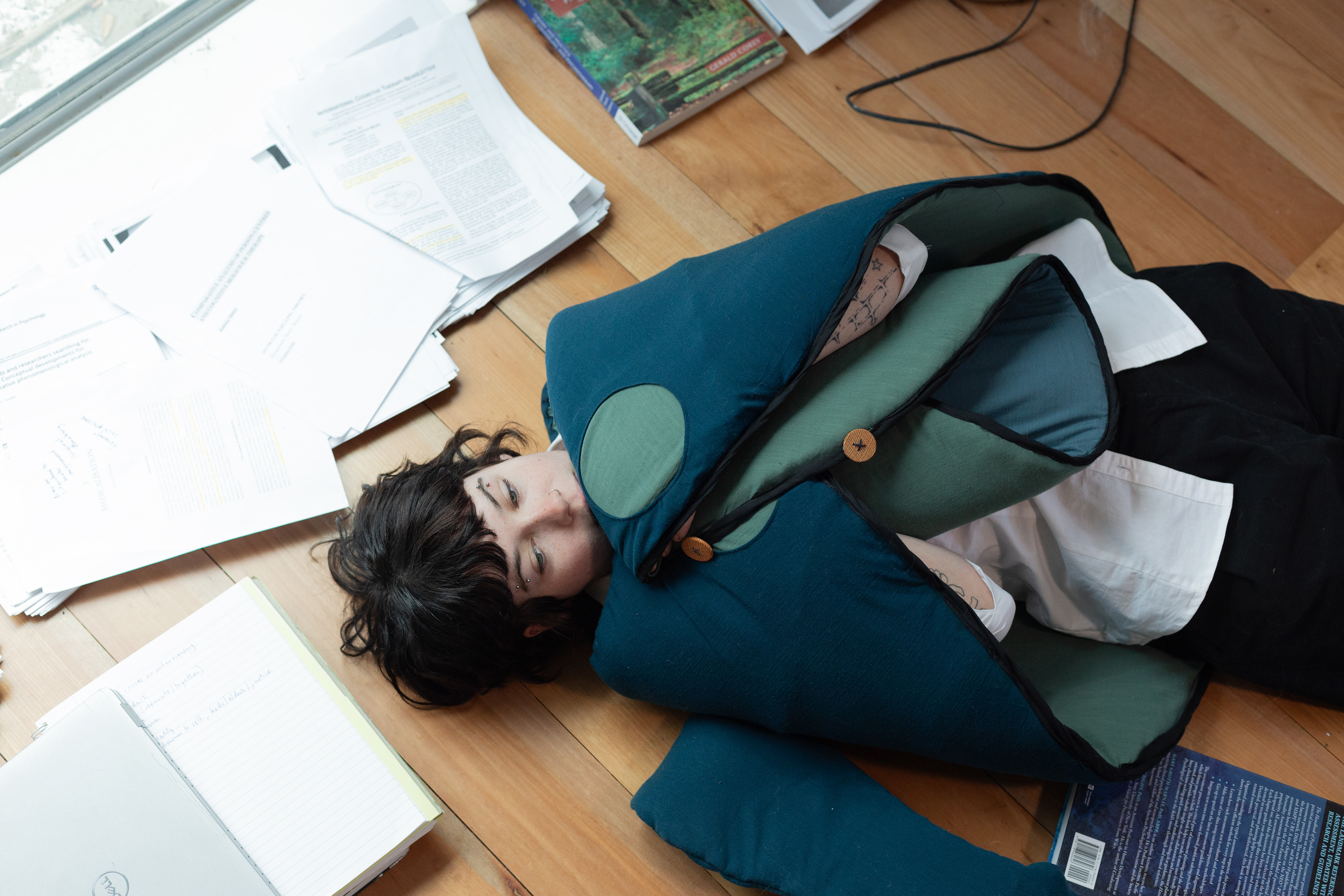
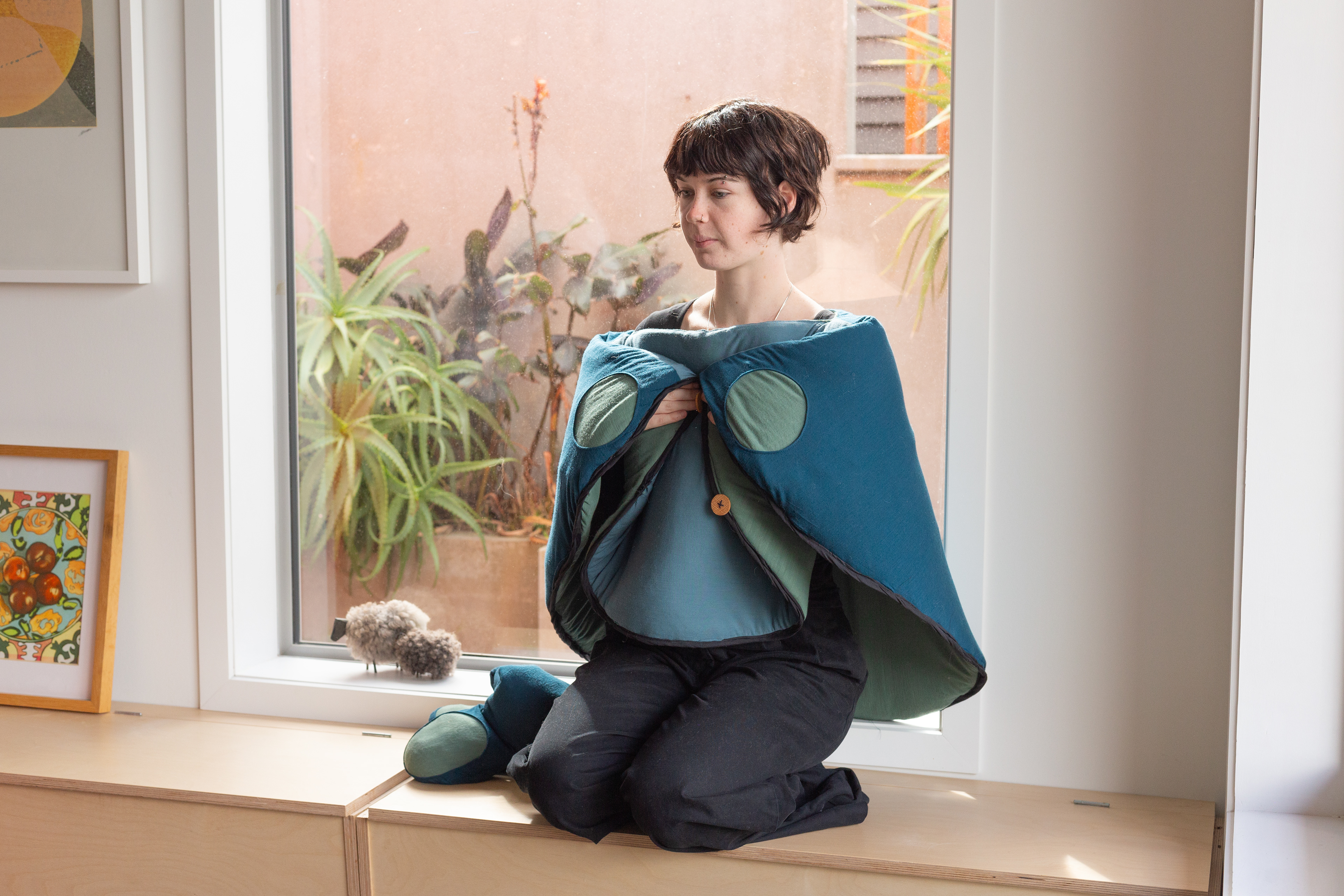
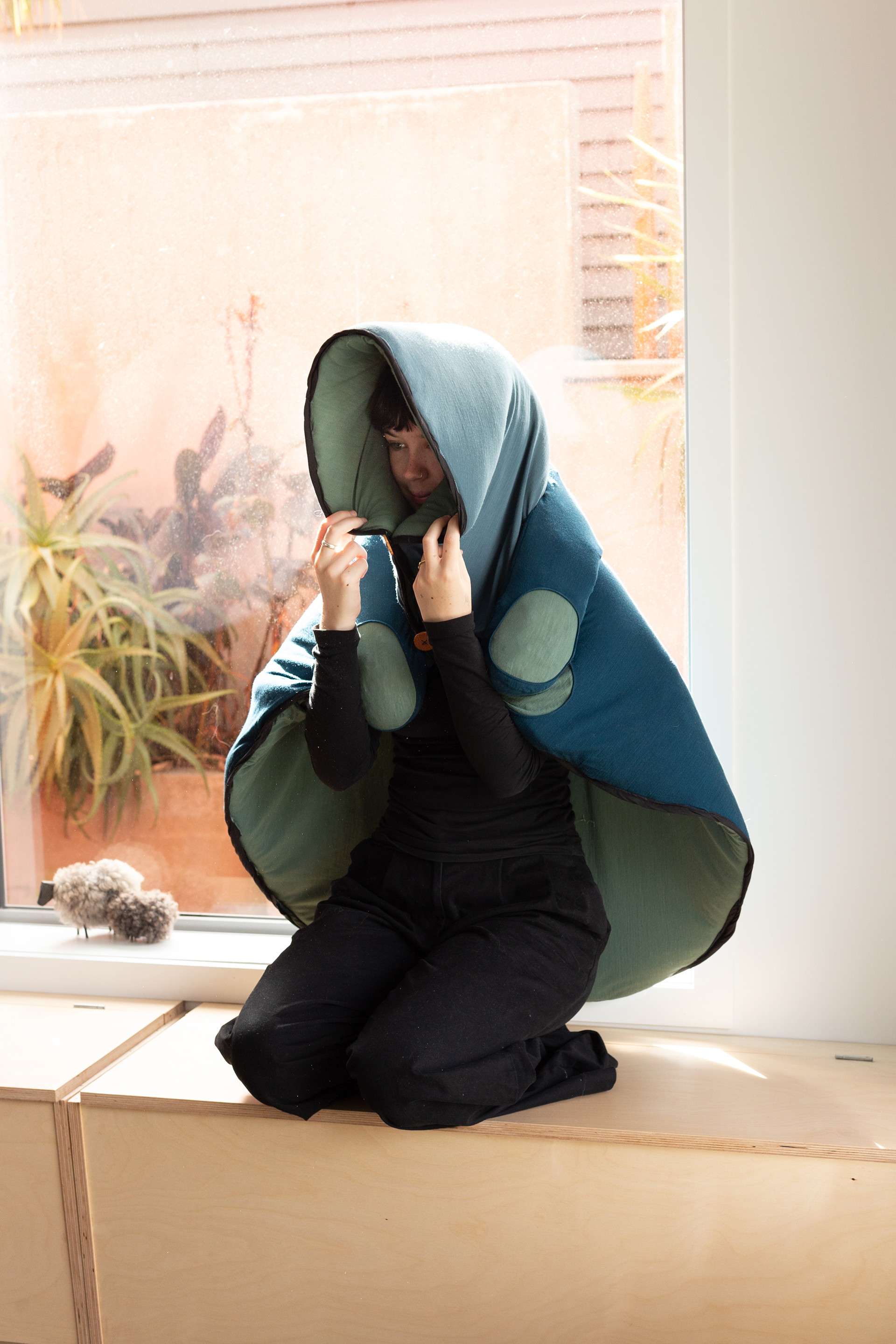
Bug is a sensory garment thoughtfully designed for children with autism or ASD, providing comfort and calm in moments of overstimulation. This innovative piece utilises New Zealand strong wool, showcasing the material’s inherent qualities while transforming its traditional applications into a modern sensory solution.


Development
Material Driven Design
Development began with a deep dive into material research, specifically focusing on the unique properties of New Zealand strong wool. Six weeks of experimentation with needle felting, wet, dry, and machine felting, bioplastics, mono and multi materials, developed my understanding of the material.

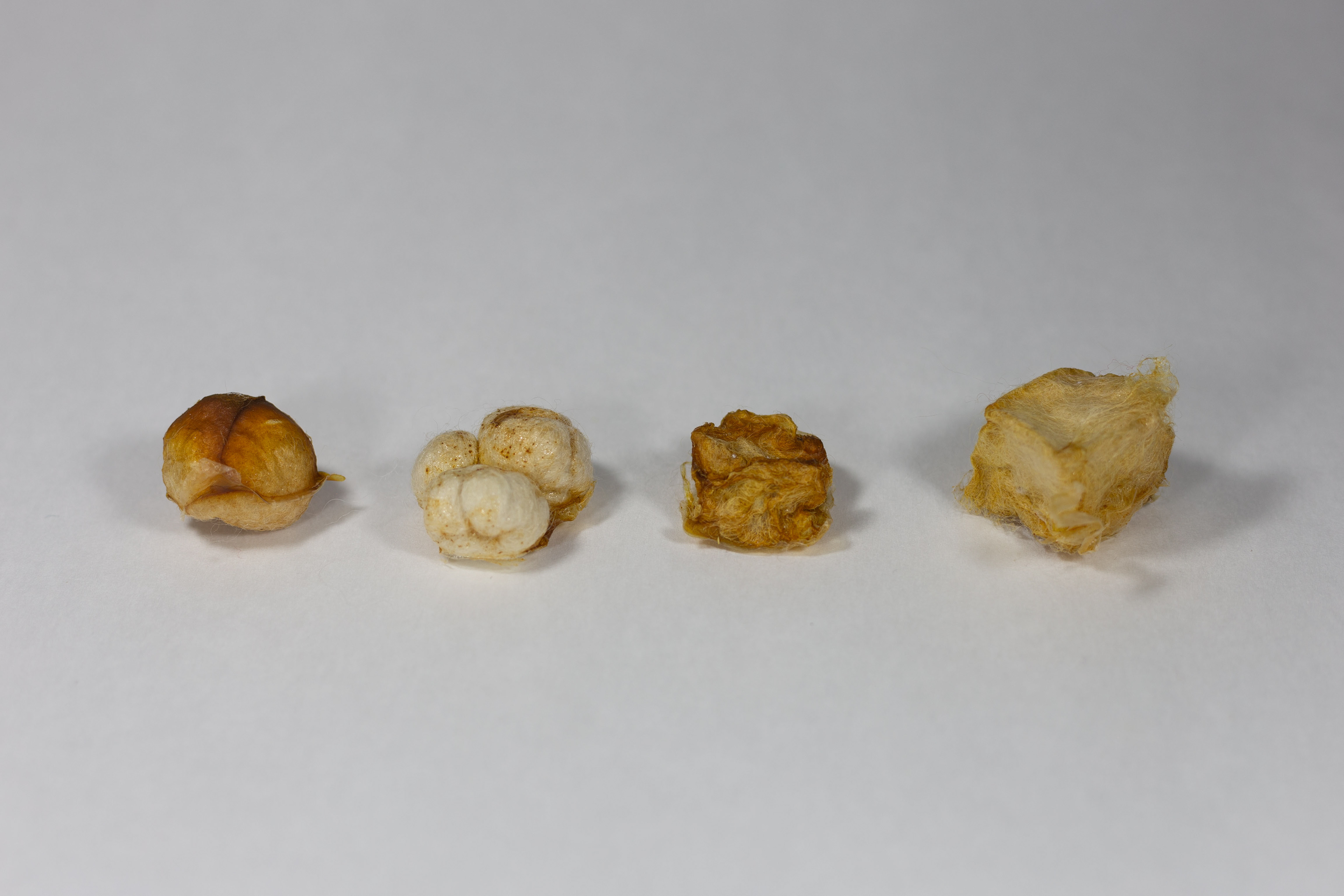
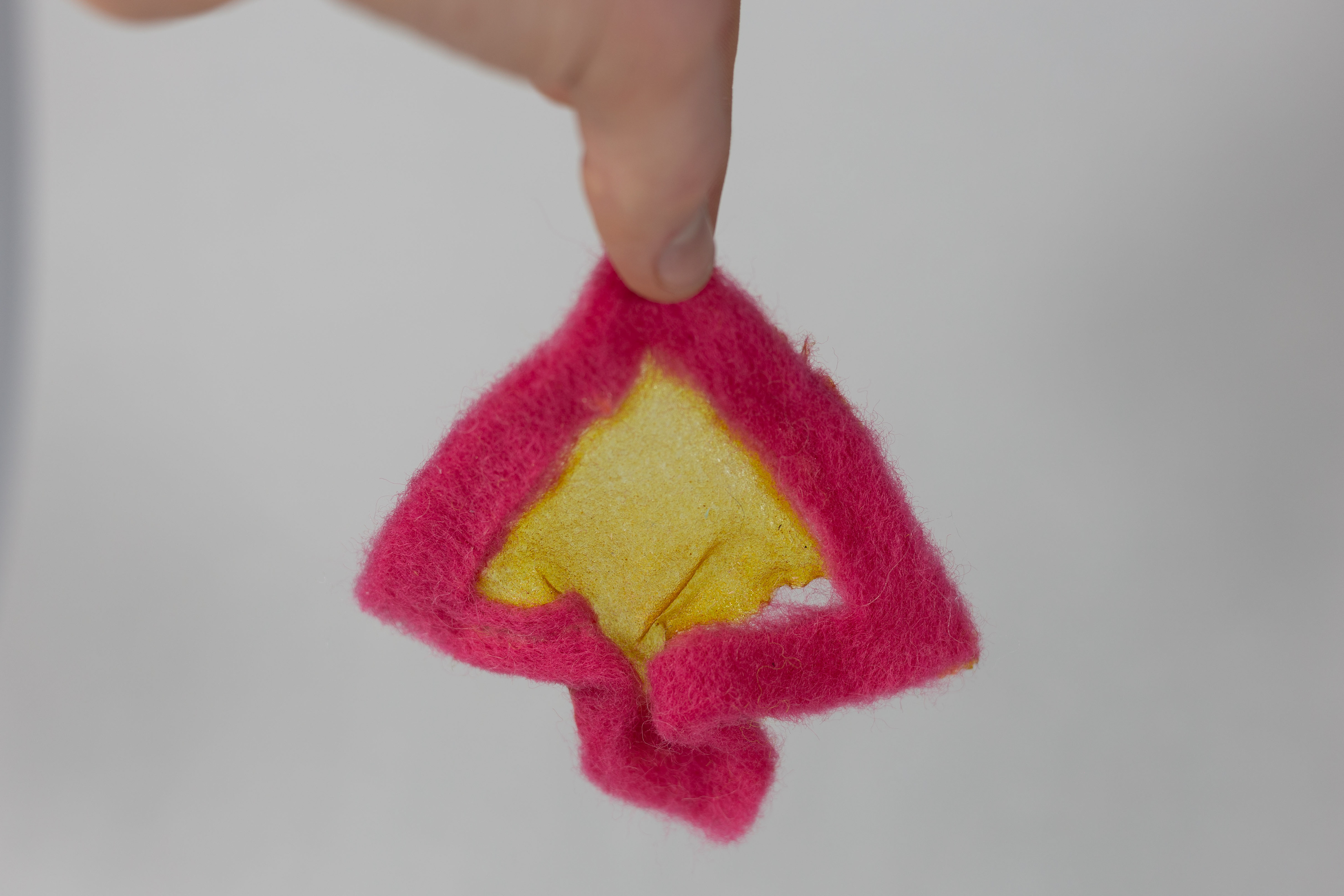


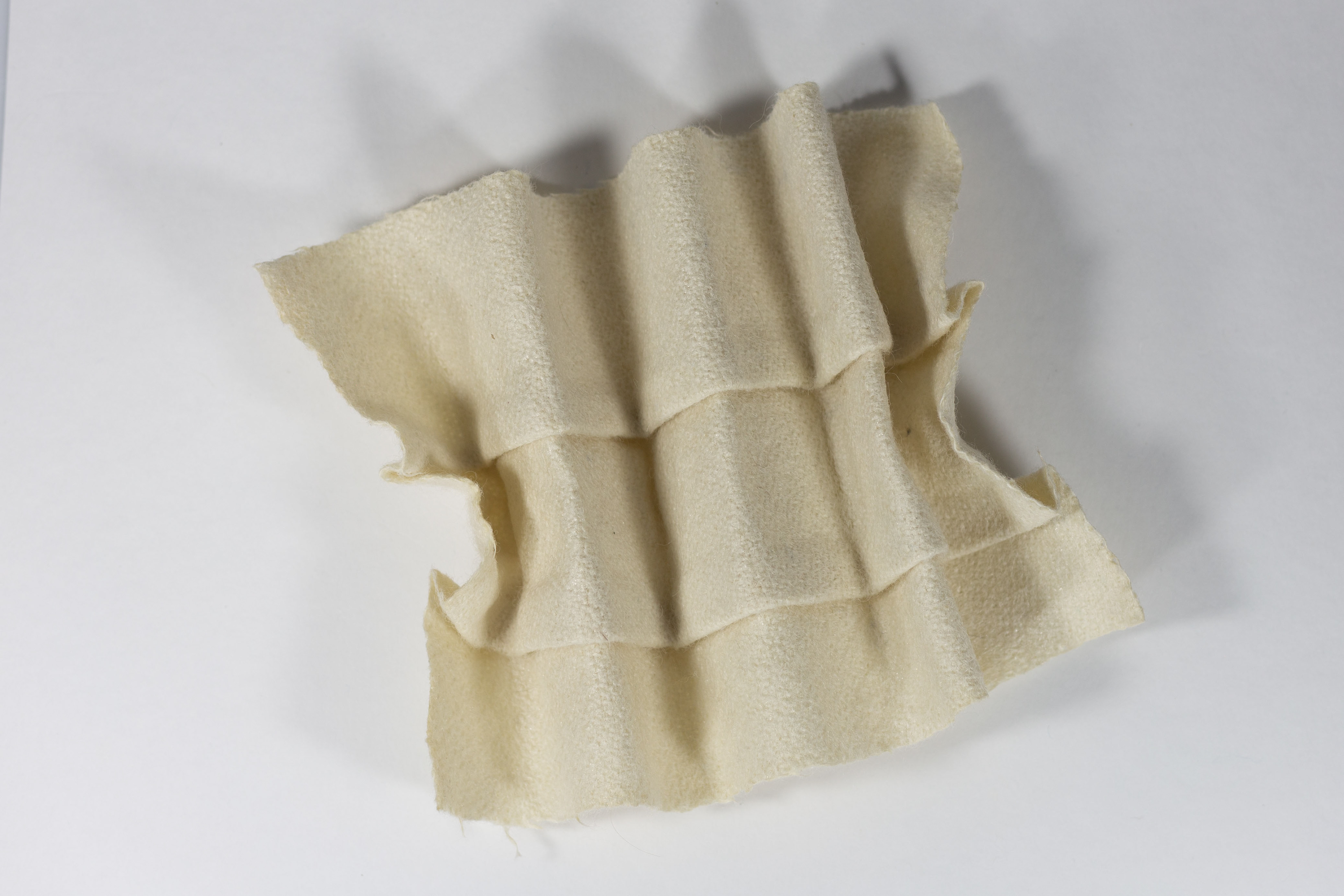

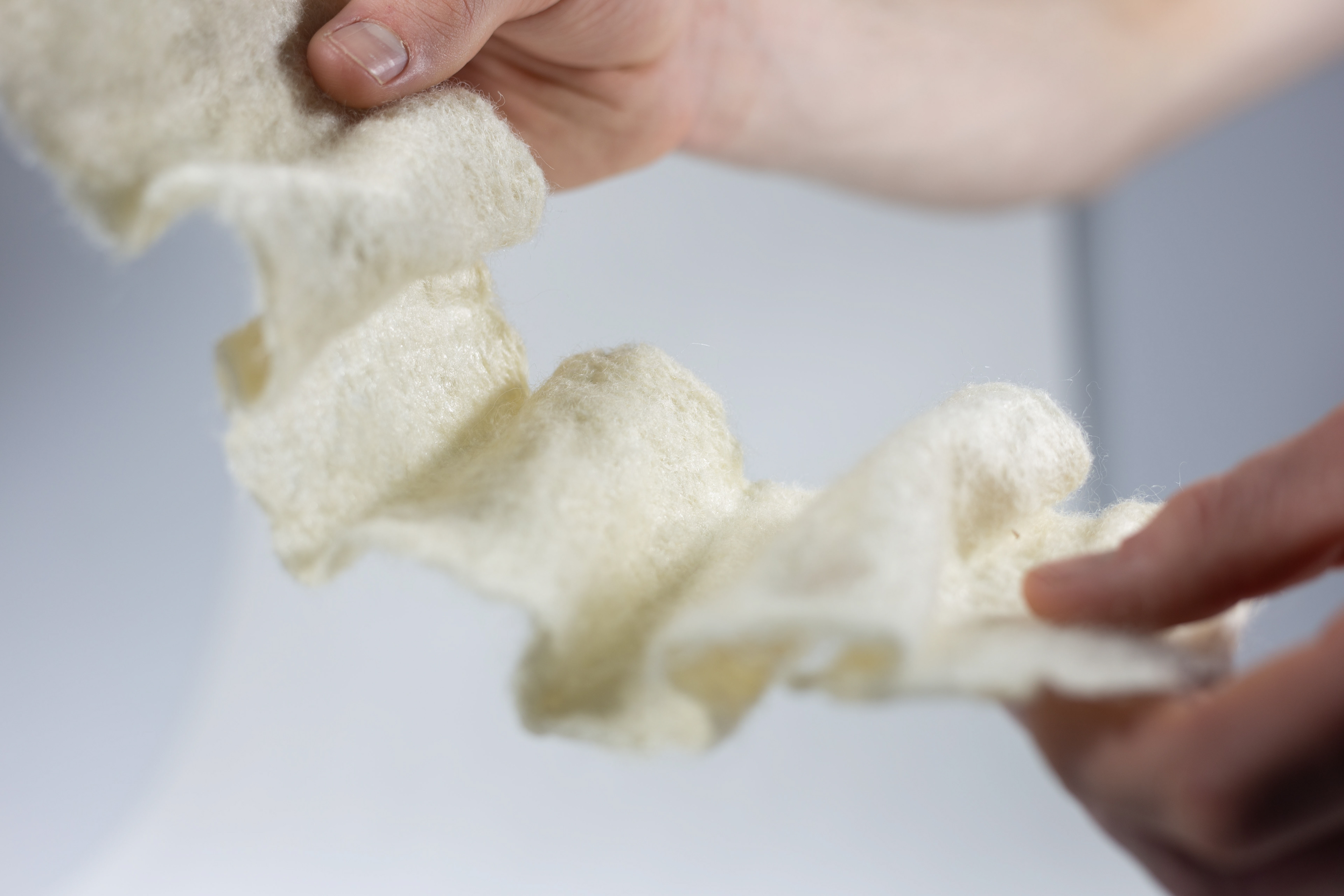
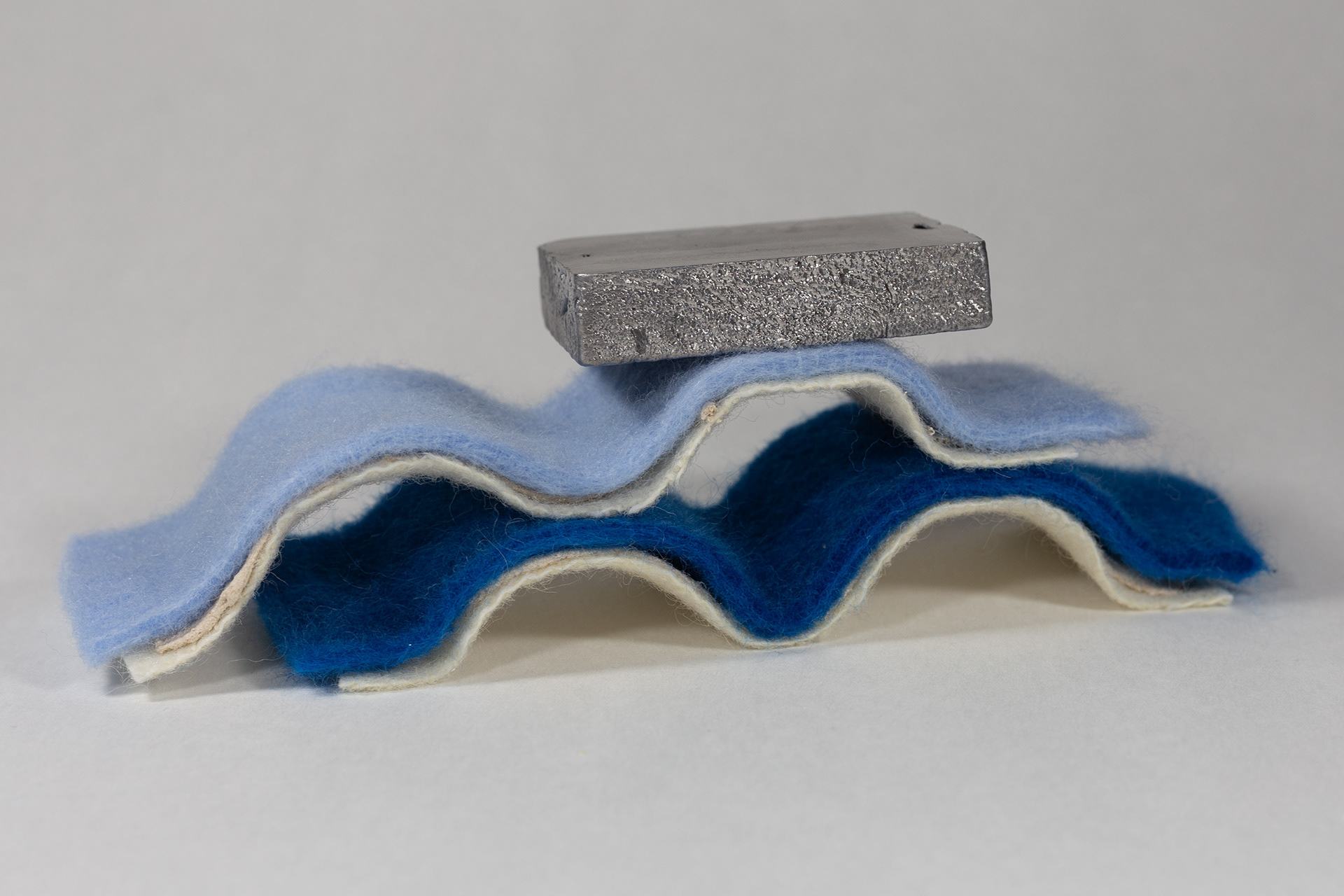


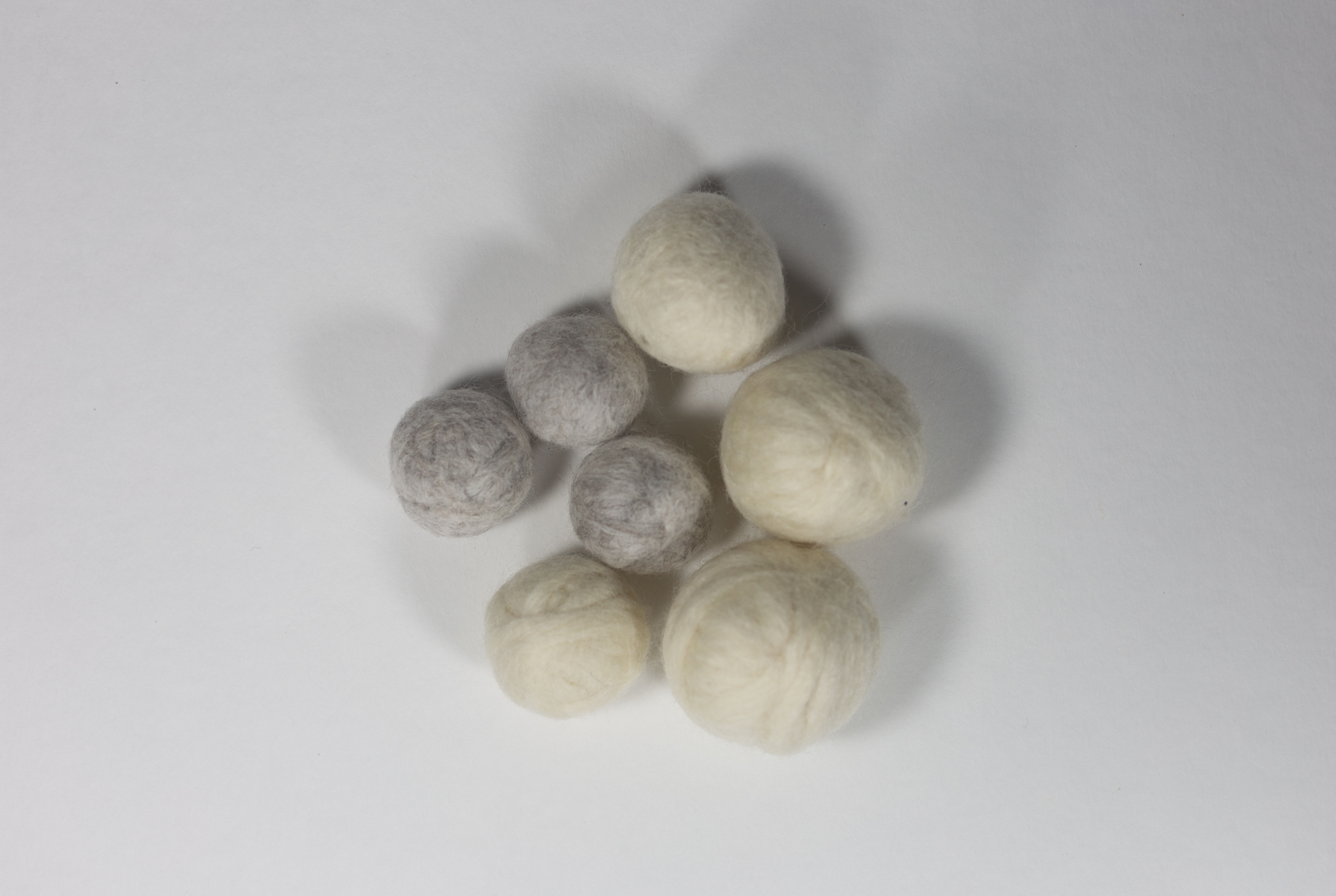
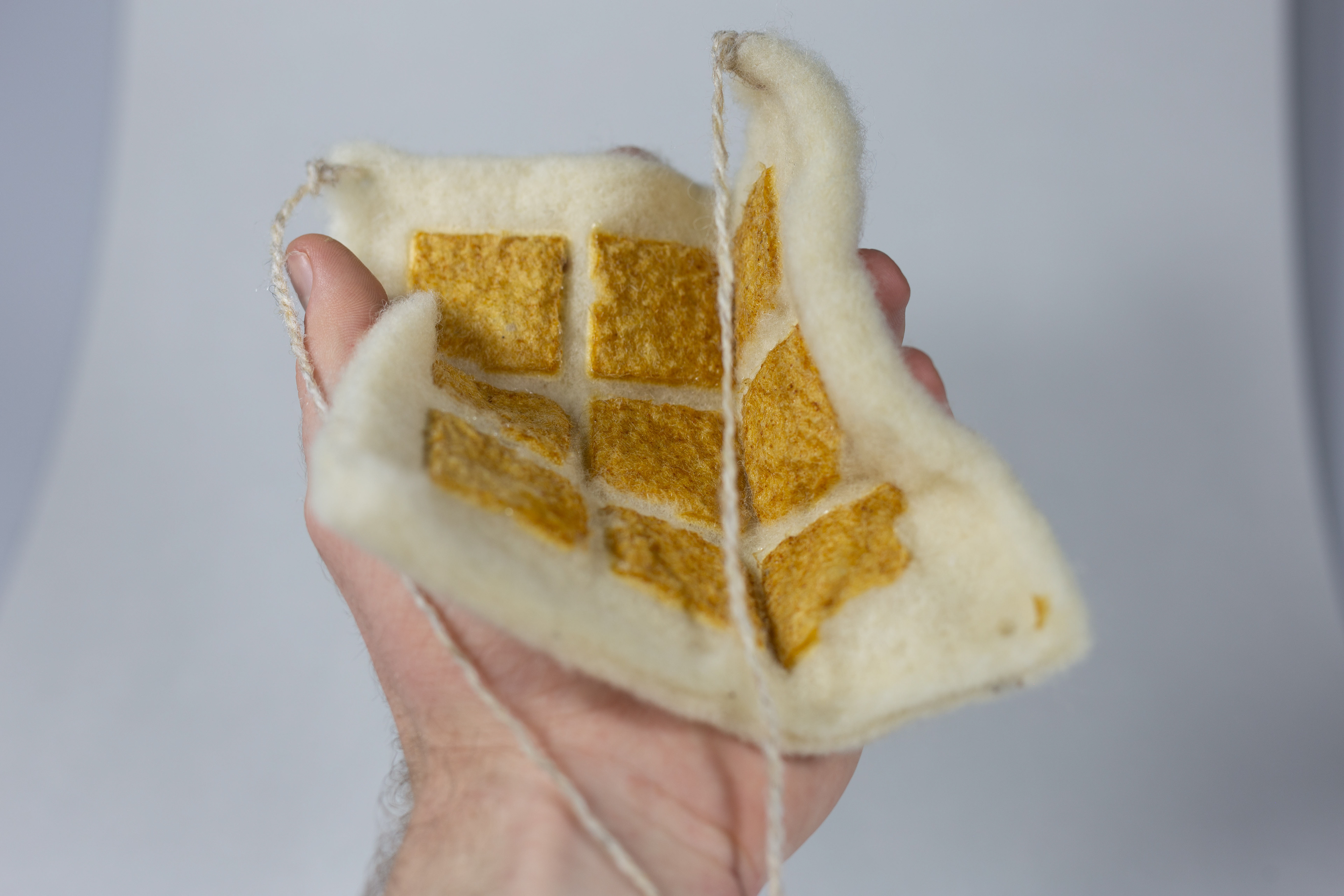
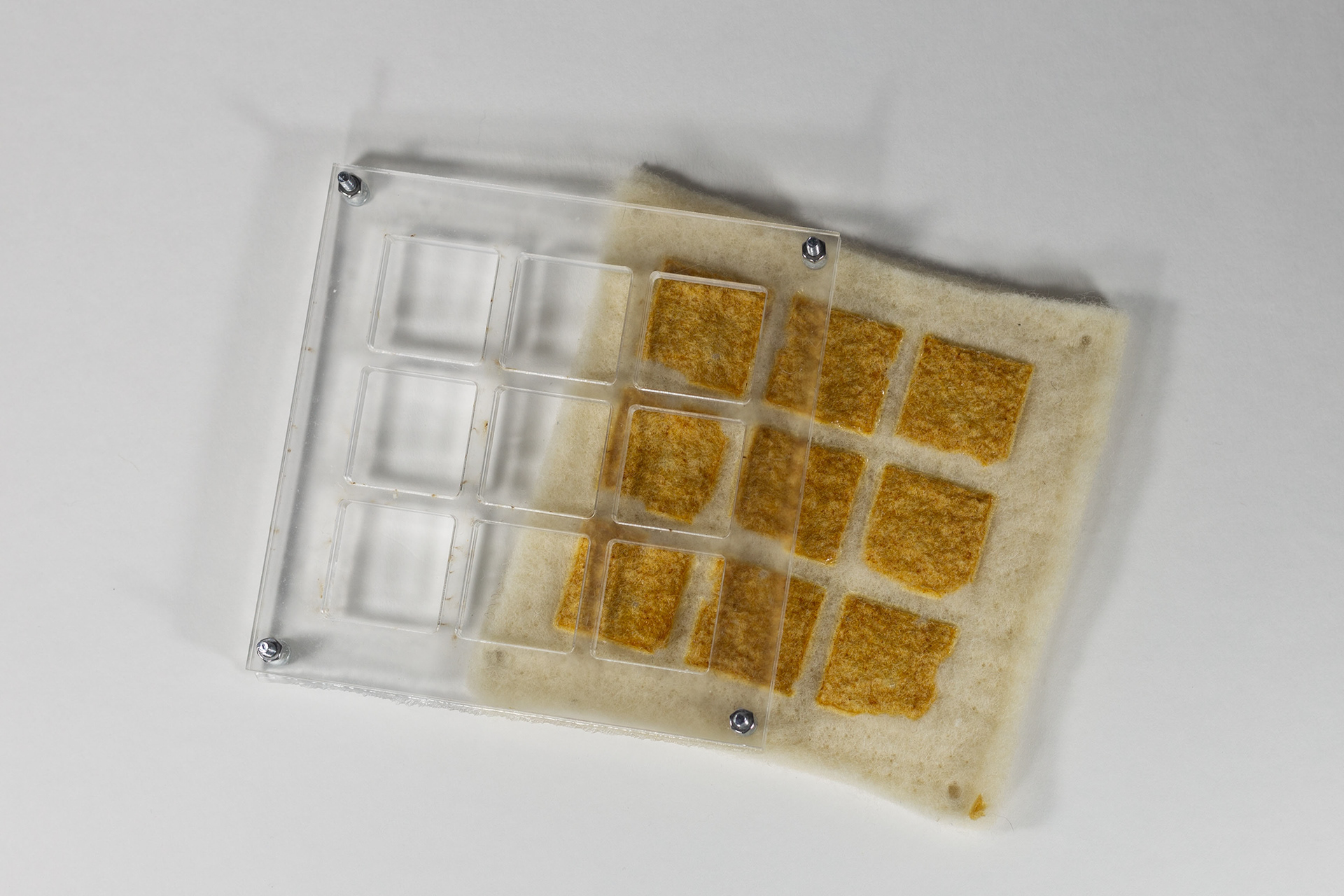


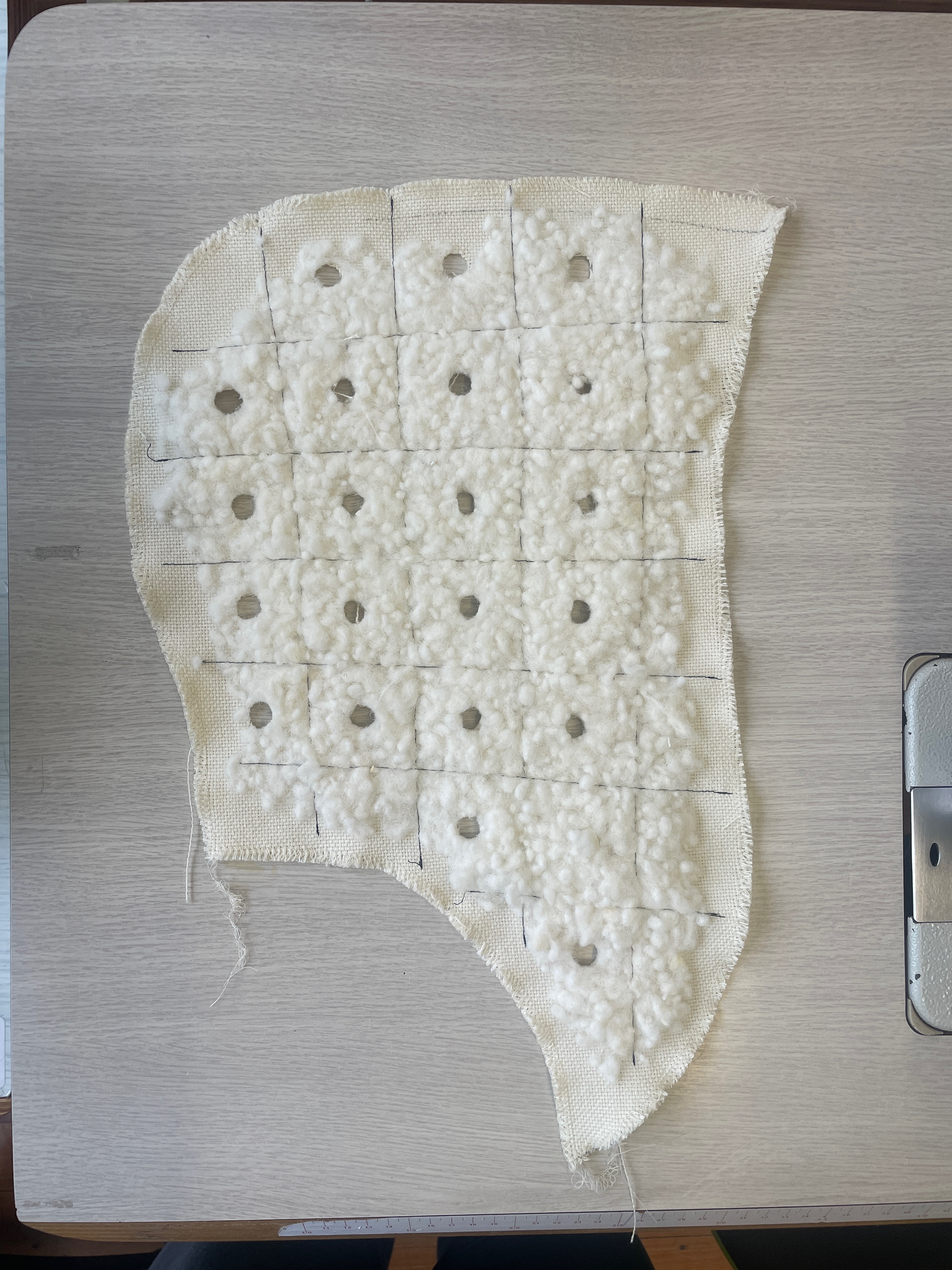
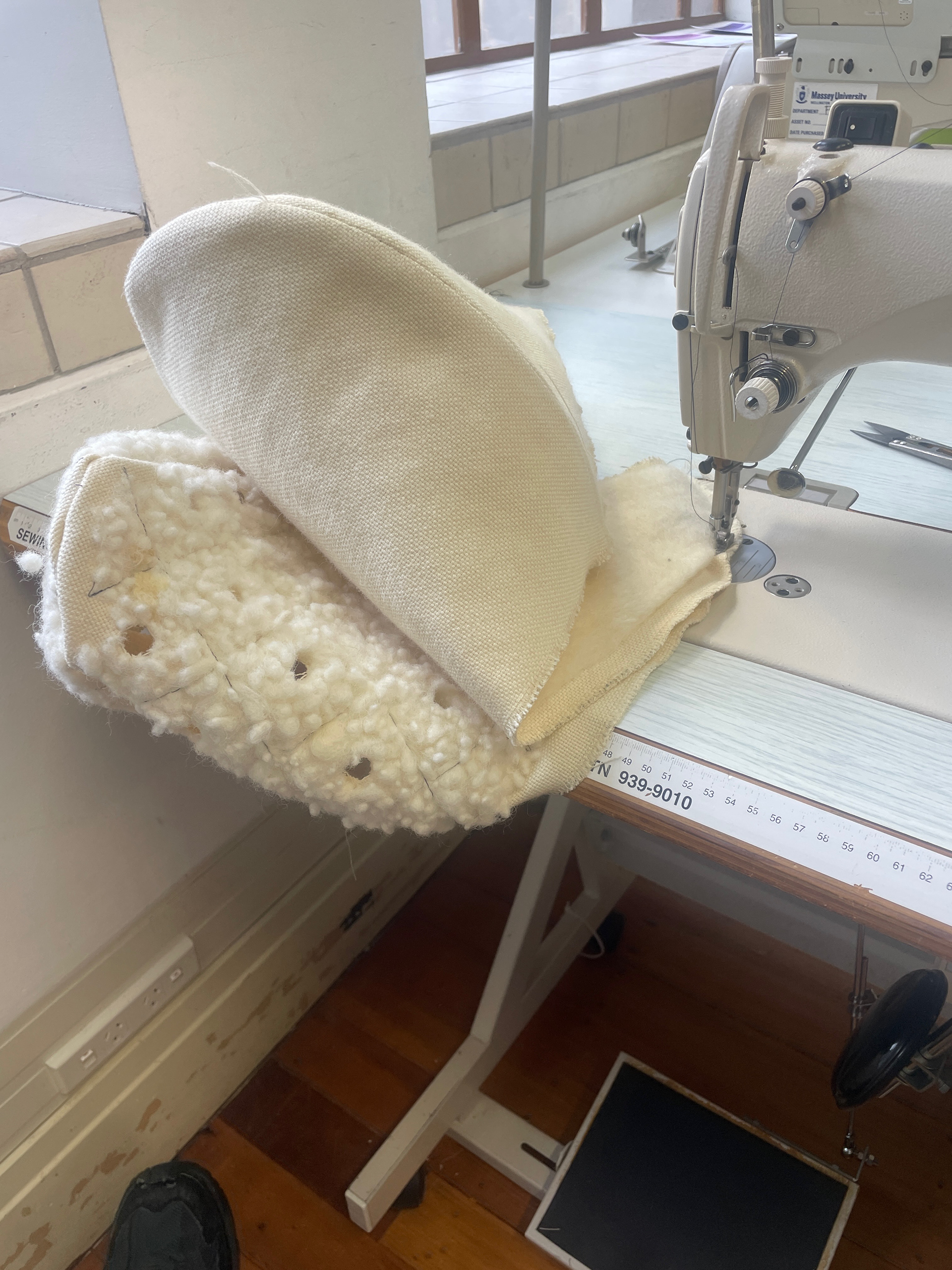
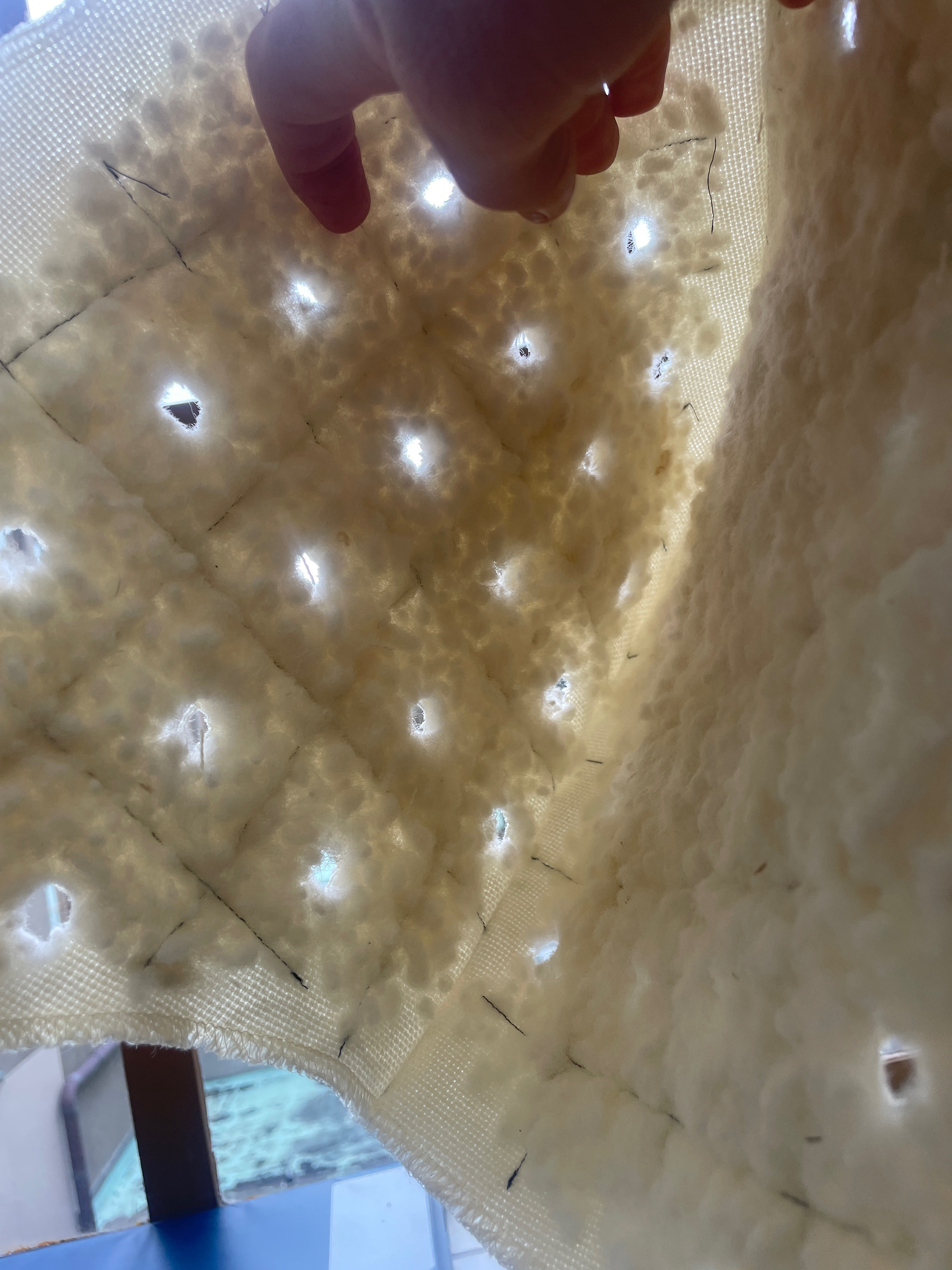
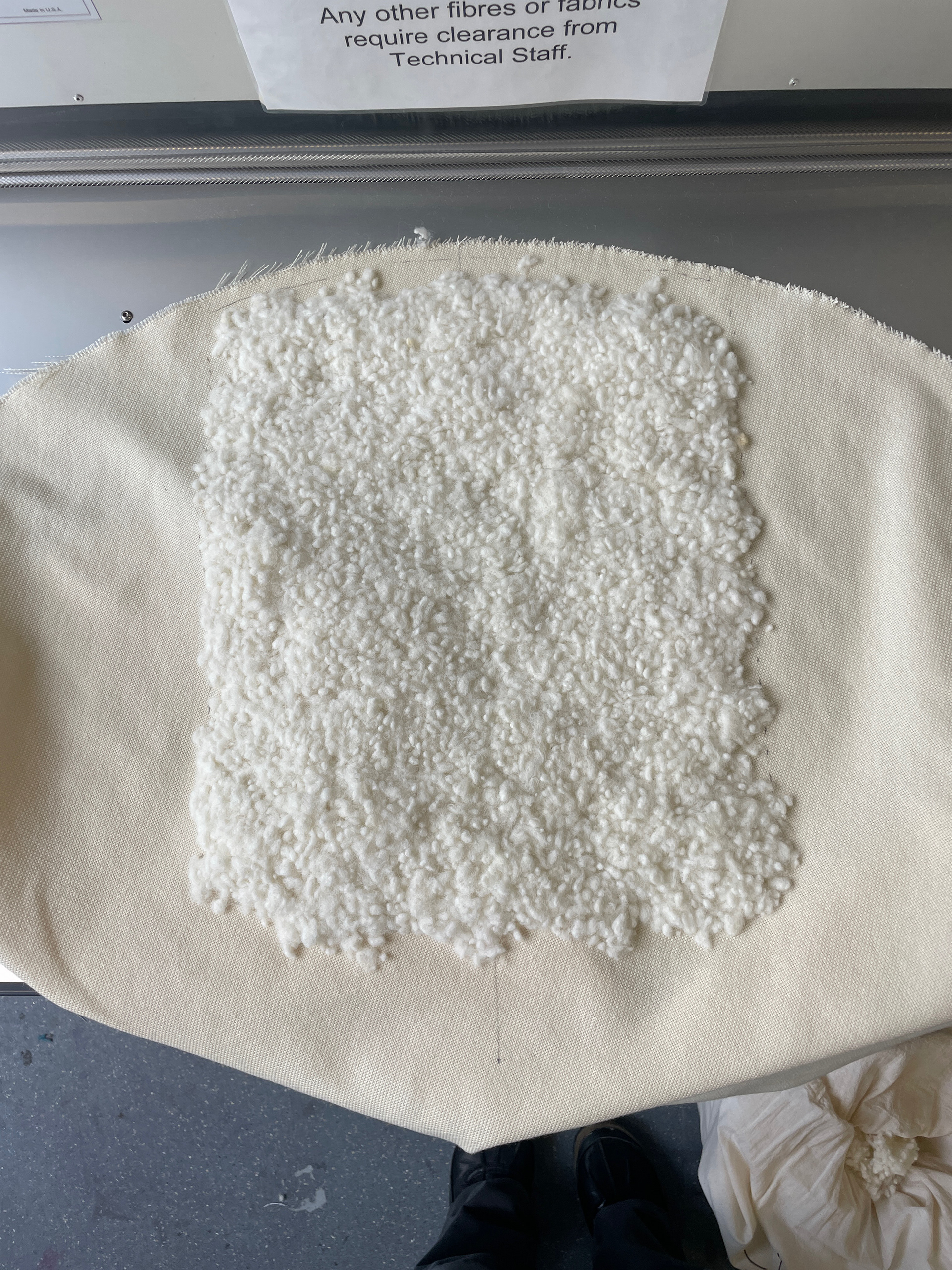
This final material was made using woven wool blanketing and 'cloud', a granular material of made from hundreds of tiny bits of felted wool. Using the acrylic frame shown amongst the material research photos, I needle-felted the two materials together. The gaps are accentuated using black stitching and structured using thin wire. Finally, I added holes to provide some depth to its appearance. While this interesting, form retentive material only made a partial and hidden appearance in my final product, this was a very valuable way to begin a project, allowing me to enter the design process with a deep understanding of the material.
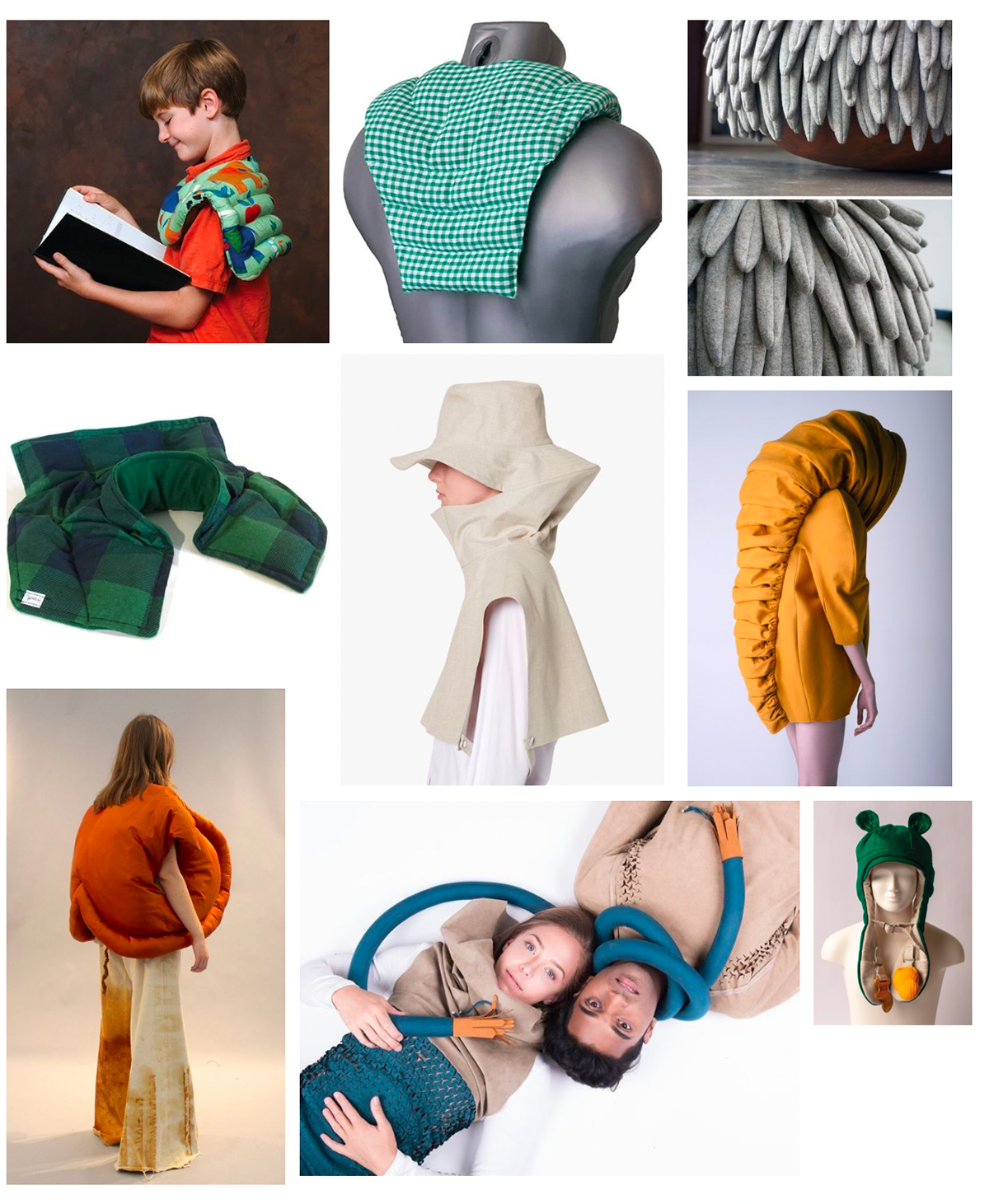
Mood Board

First Sketch
Prototype 1
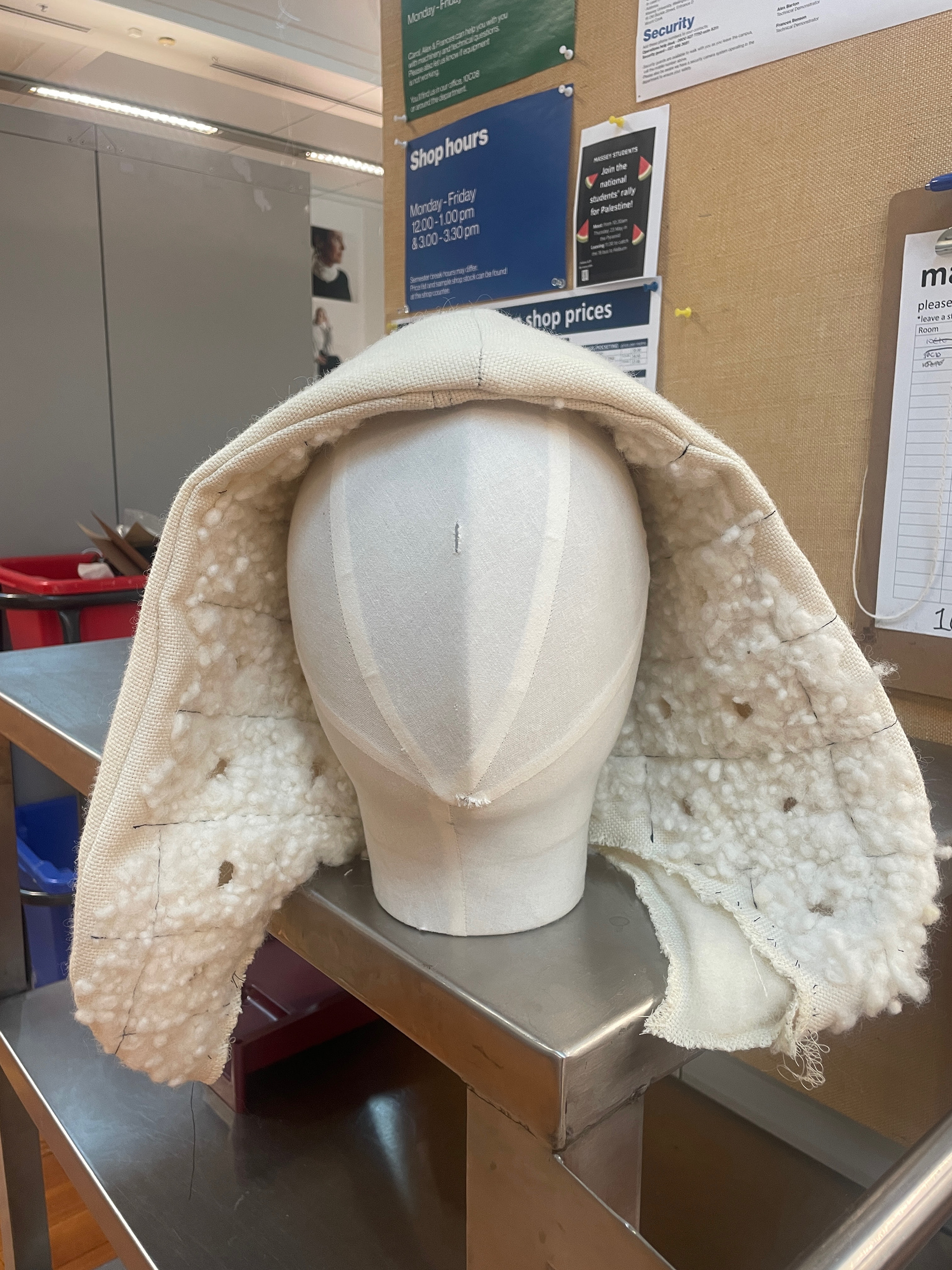
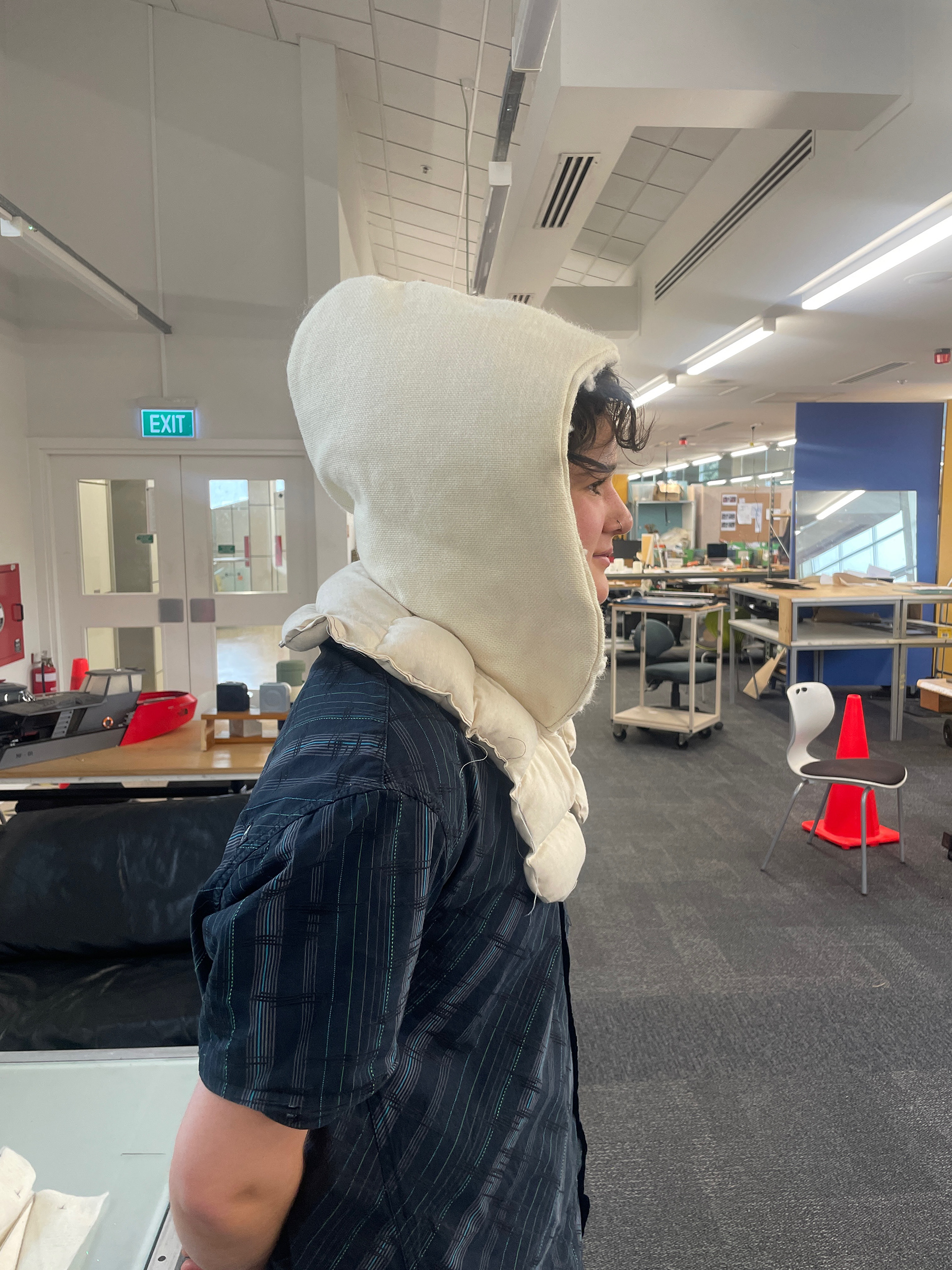
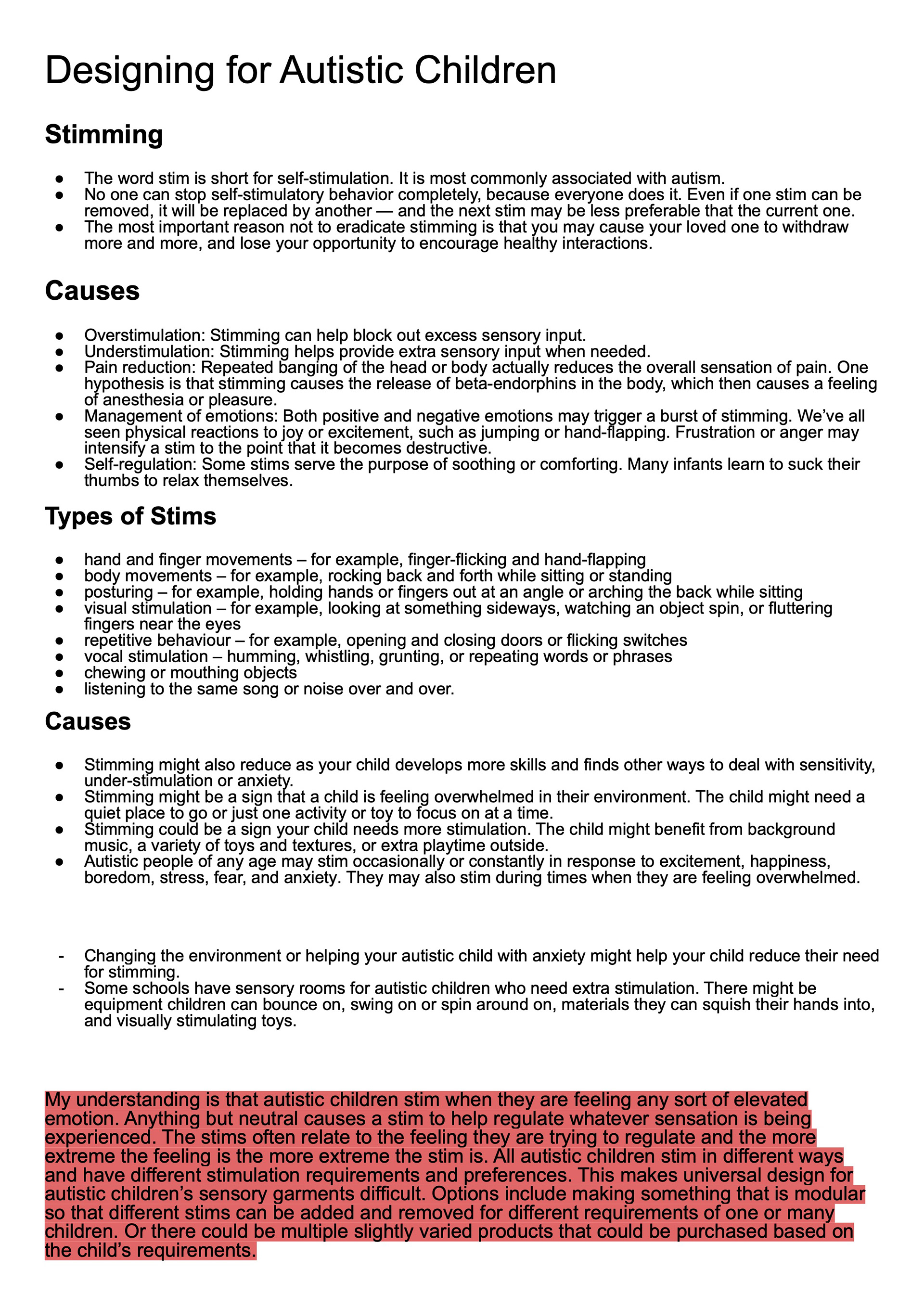
The noise dampening property of wool lead me to look into sensory products for people with ASD. I found lots of weighted vests and playful garments that used noise dampening and weight as a method of stimulation. Using my mood board and developed material I started with this sound dampening hood, weighted using rice. This was ok, although not quite big or heavy enough. This lead me to explore the form a bit more, looking to move towards some of the larger more intriguing garments from the mood board.
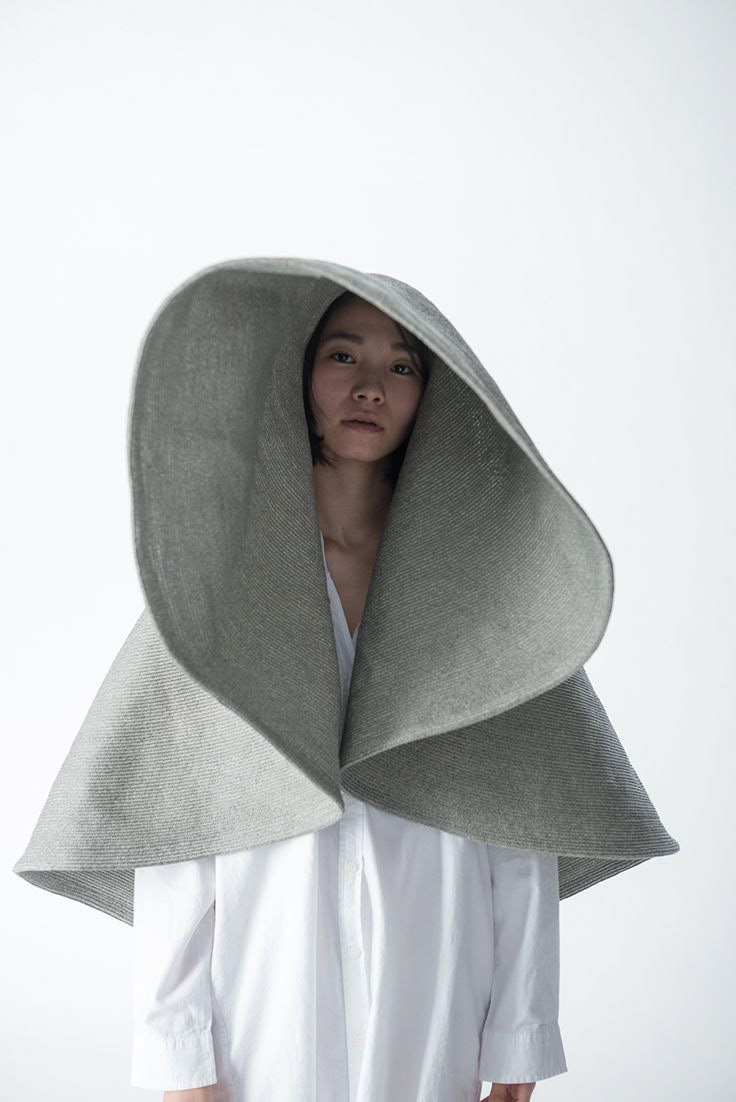
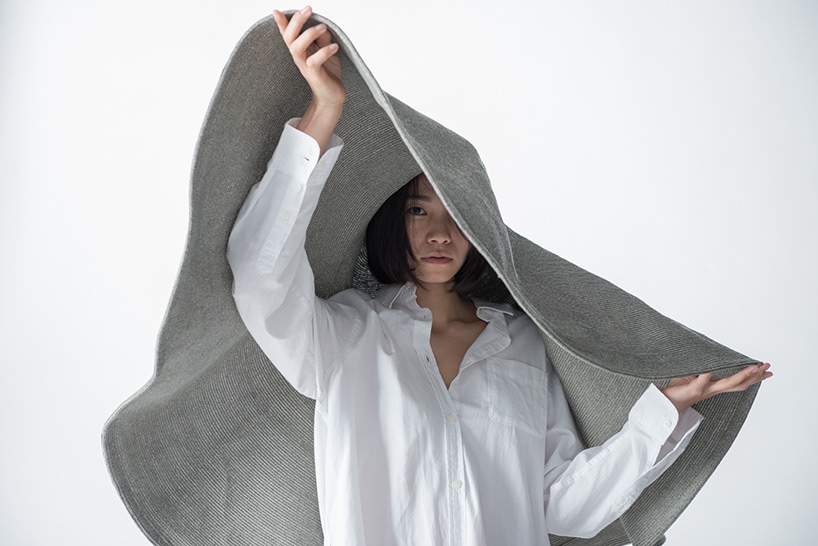
This cascading hat by Kosaku Matsumato was what sparked the direction of my final design. It made me realise that a 'hat' does not have to fit close to the head.
This garment also looks playful and cosy. Something that can be worn in many different ways and interpreted by the user.
Prototype 2
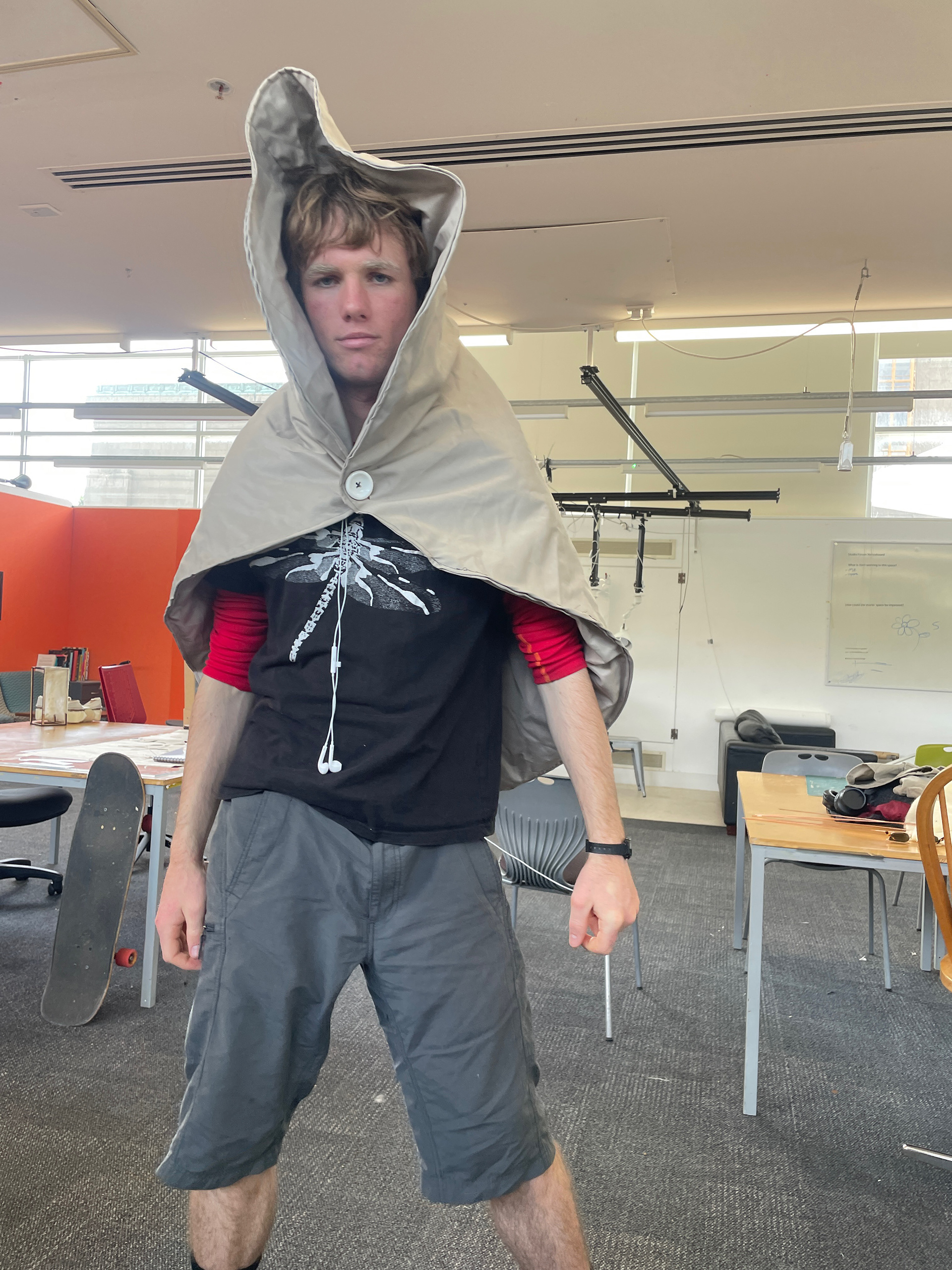
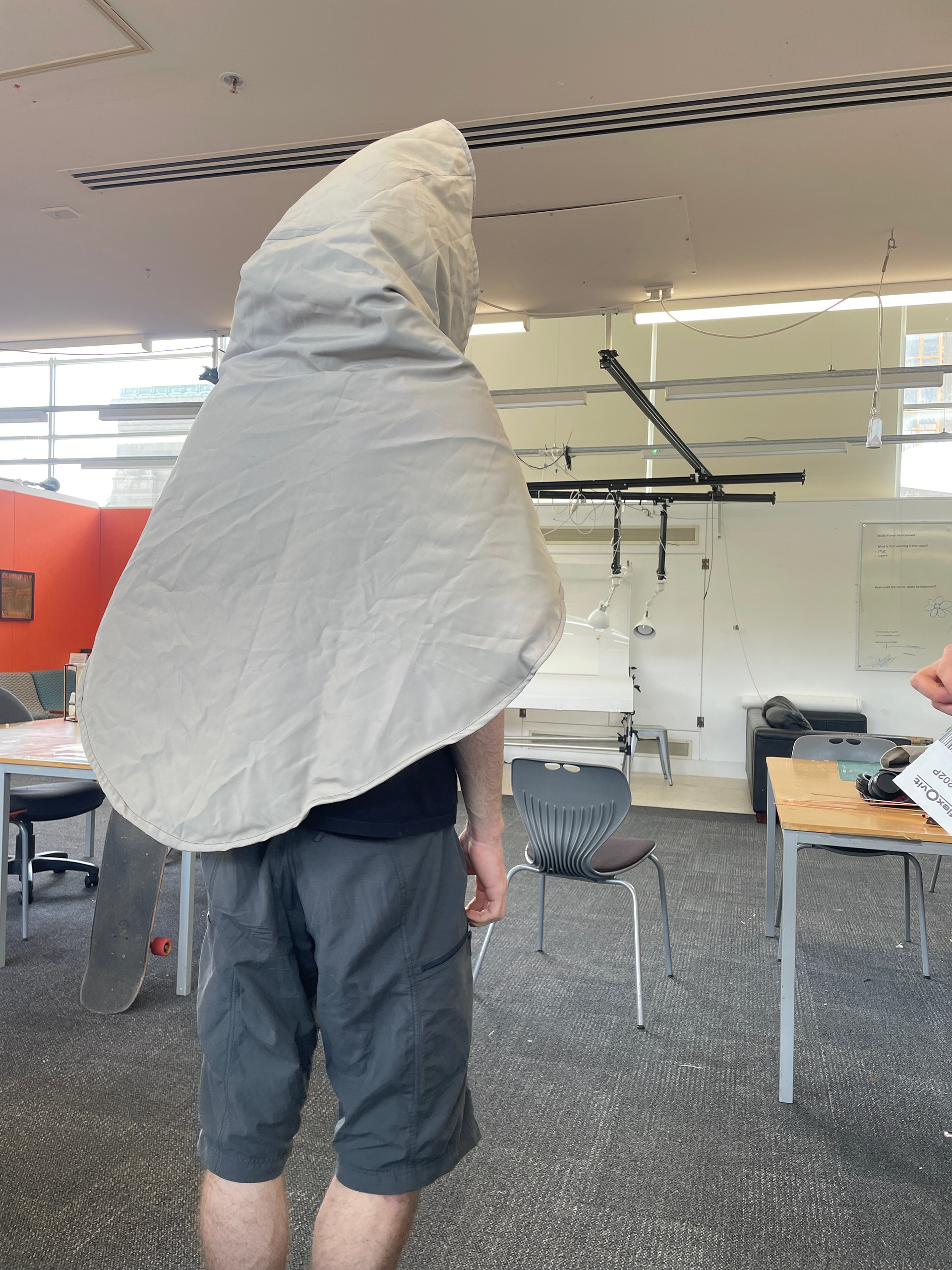
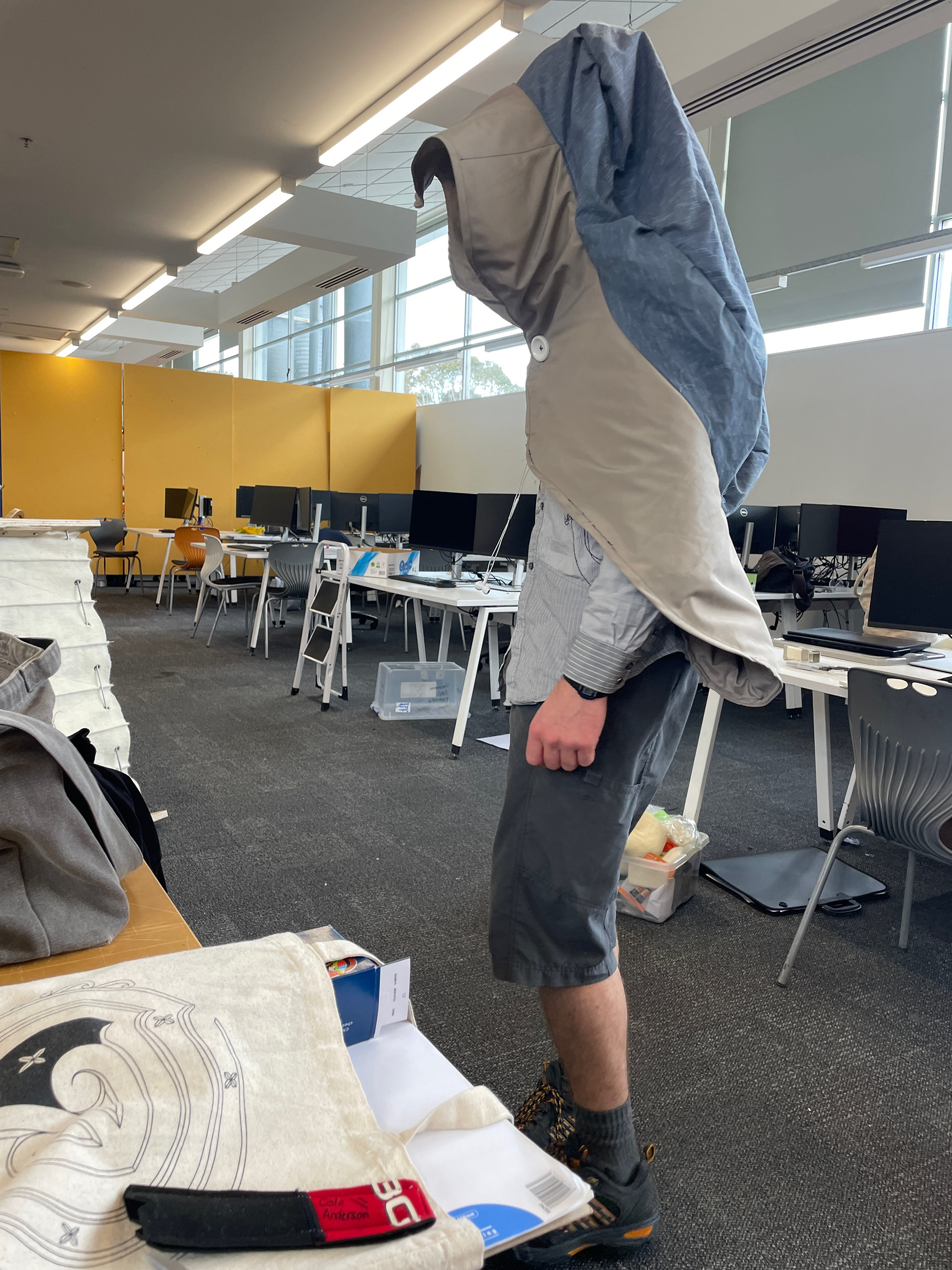
Directly inspired by Matsumato's design, this was the following prototype. The exterior is an old curtain and the interior is filled with felted strong wool.
I gave it to some class mates for some feedback and it was conformation that this was the right direction. Each person responded playfully, wearing and using it in unique ways.
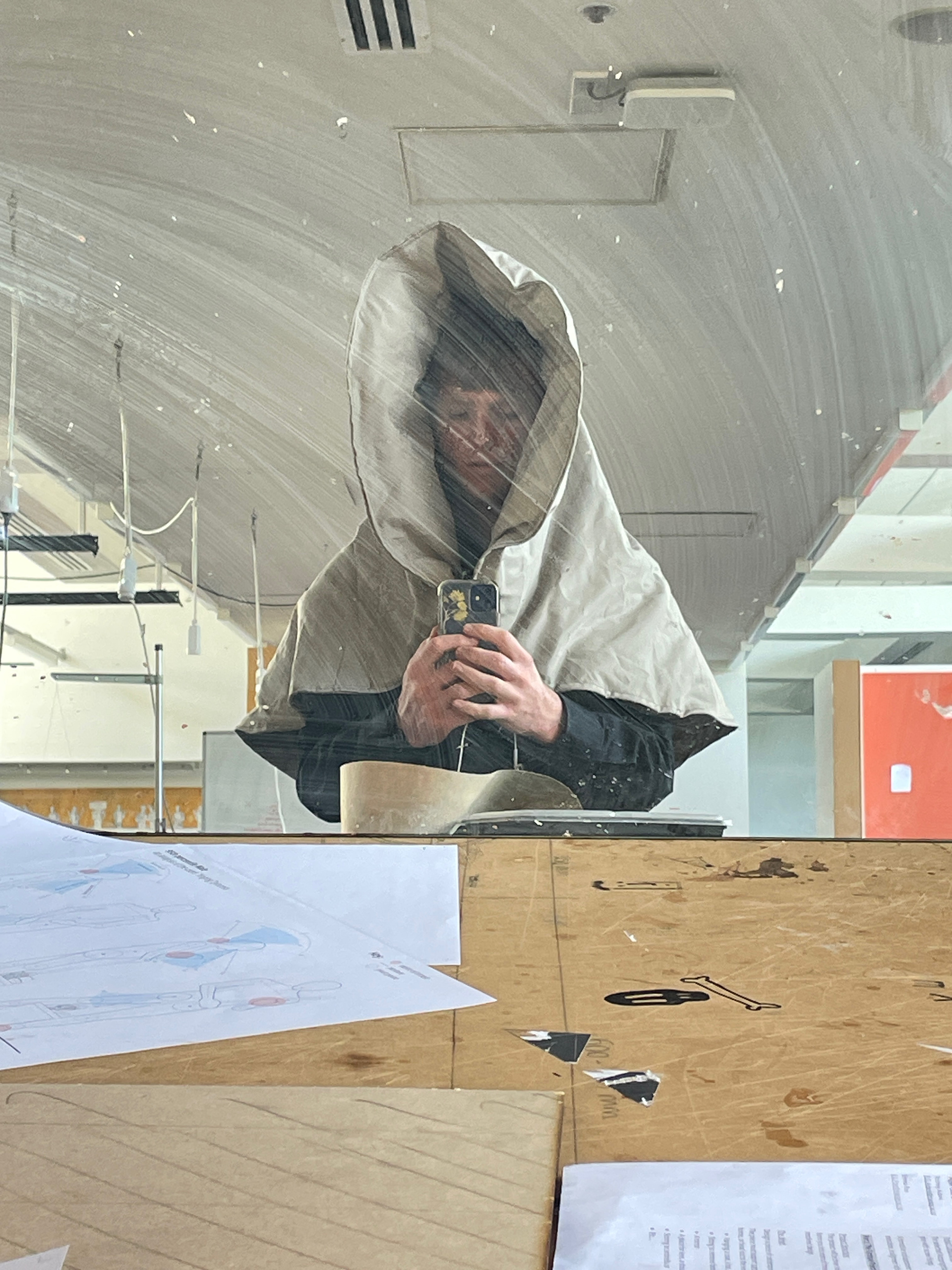
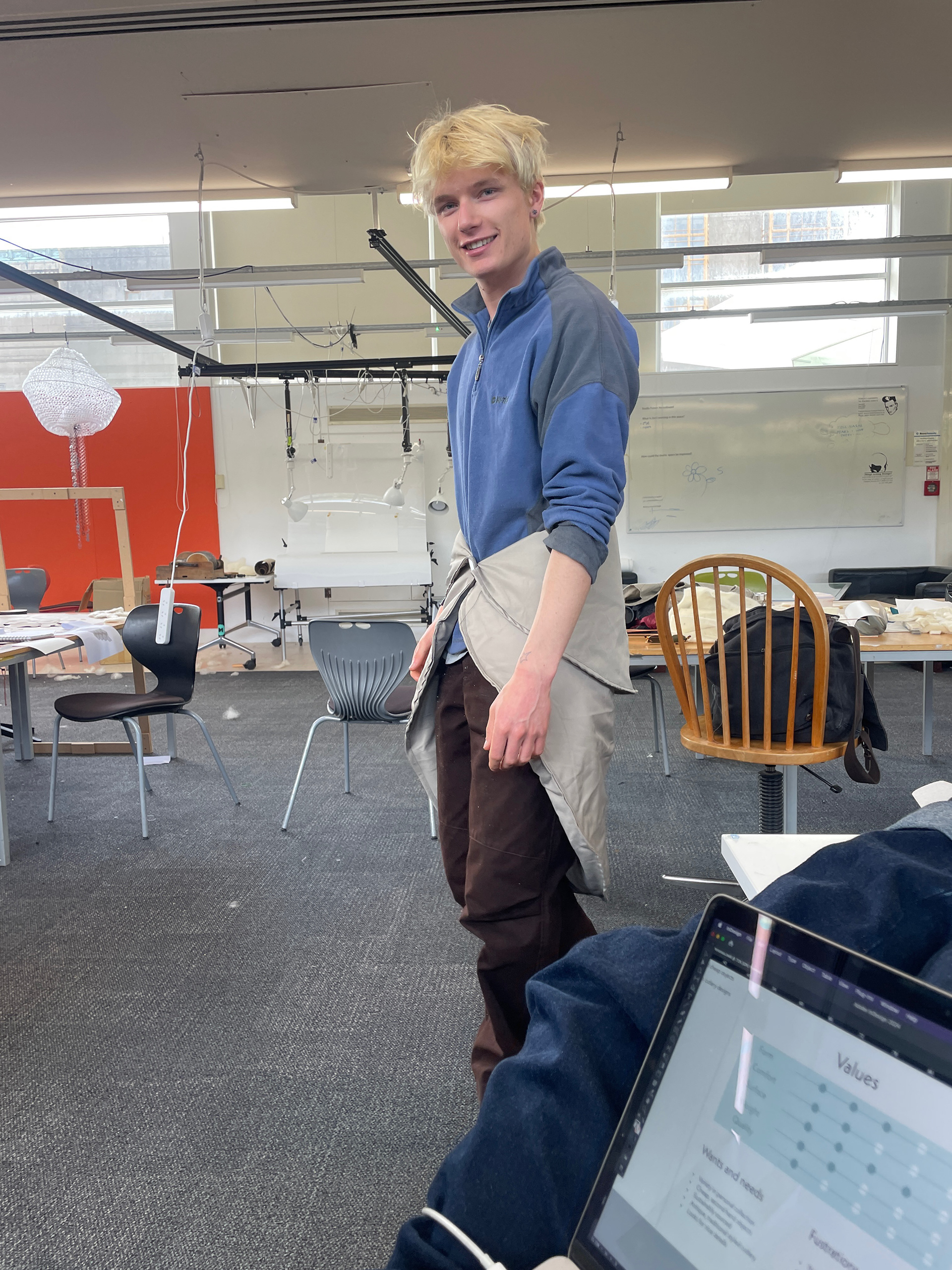
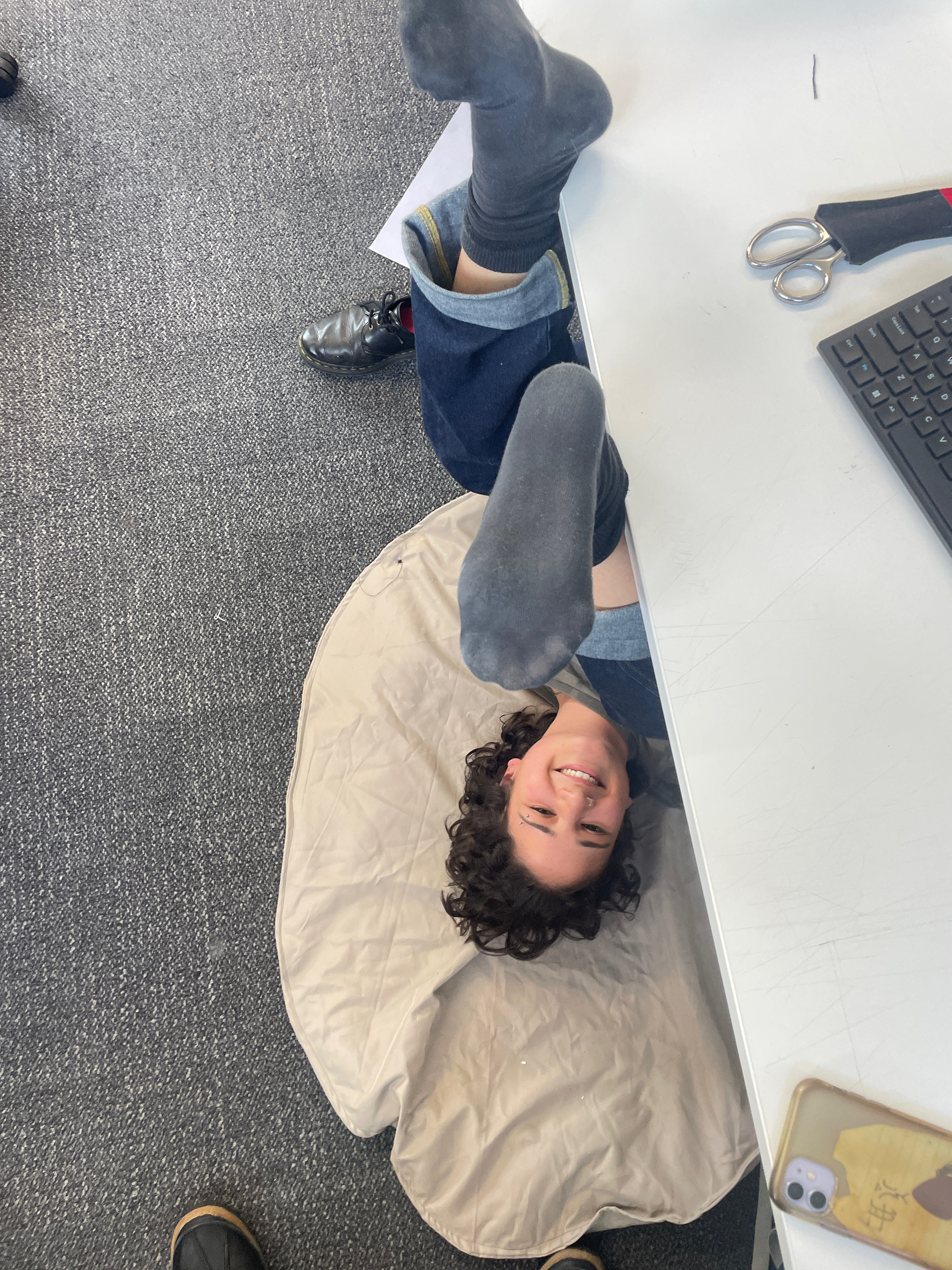
Prototypes 3-5
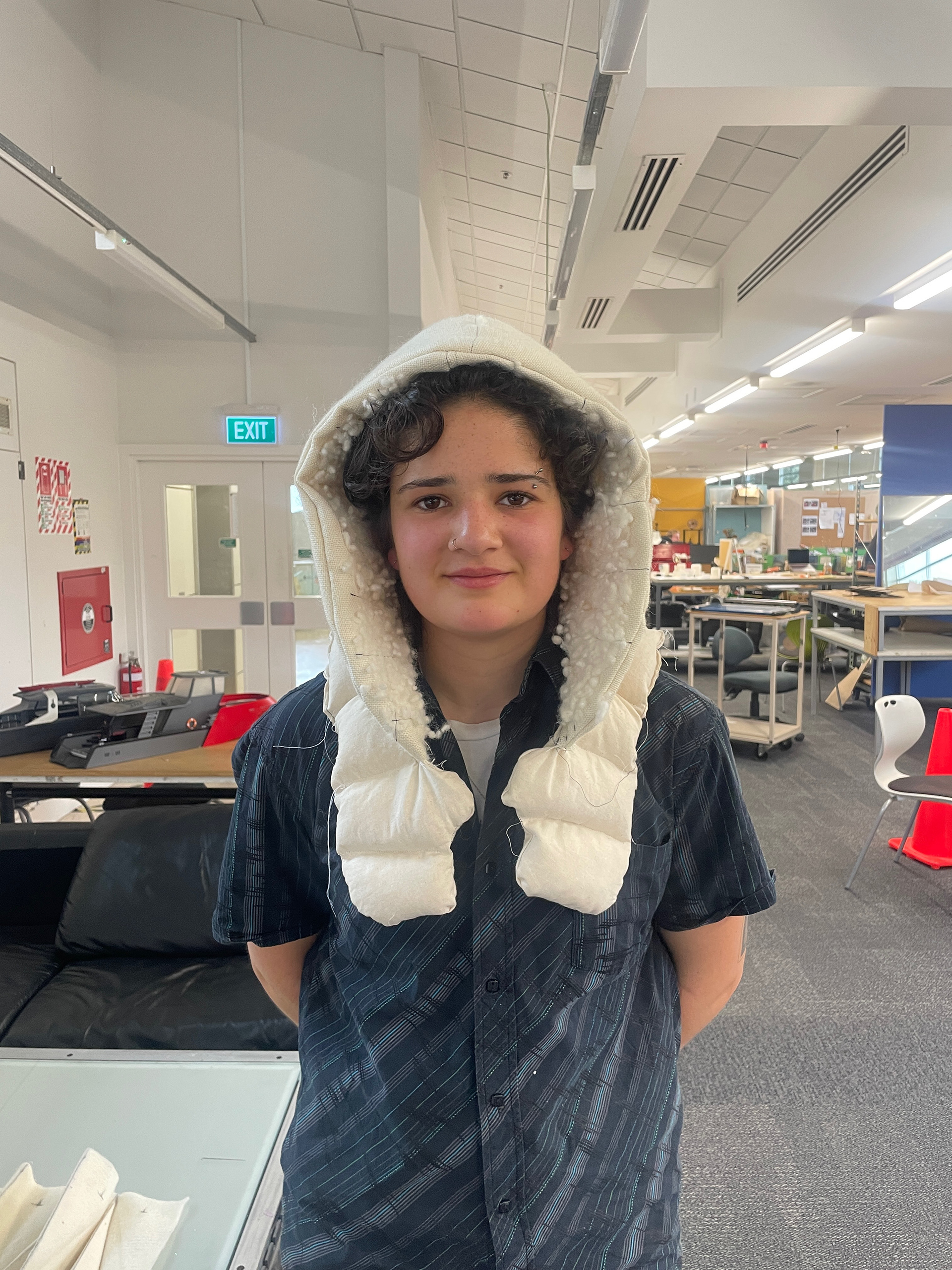
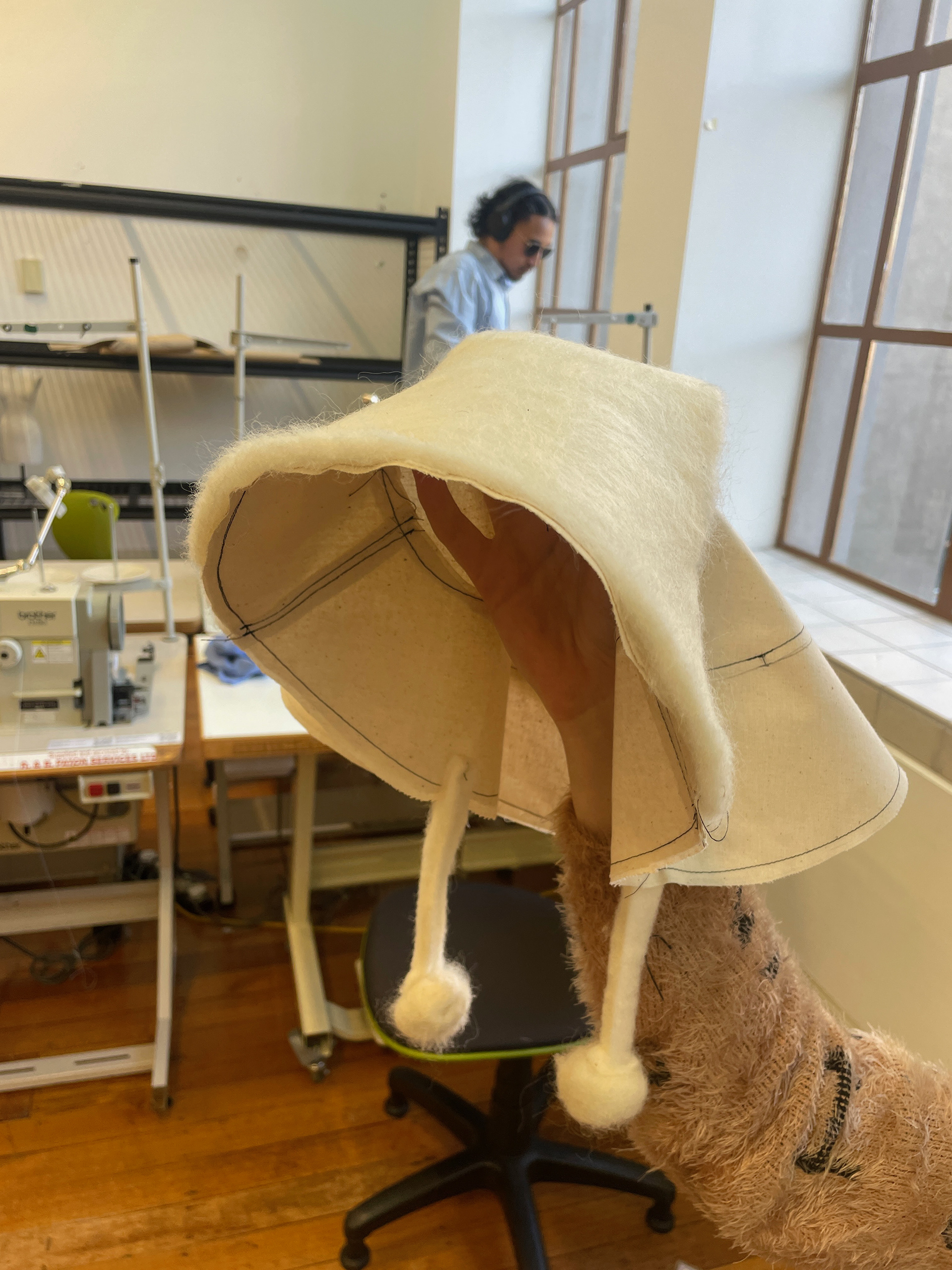
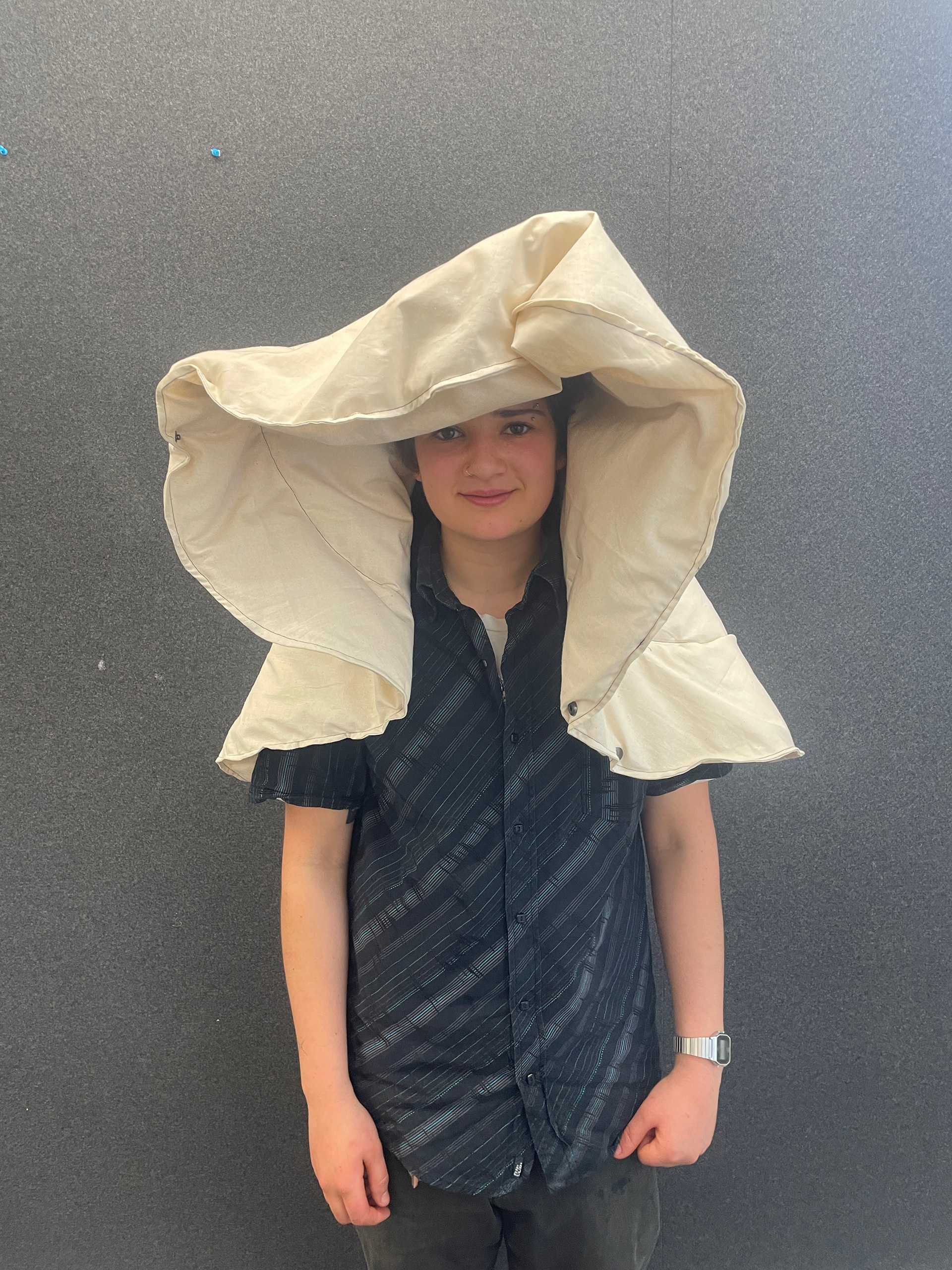
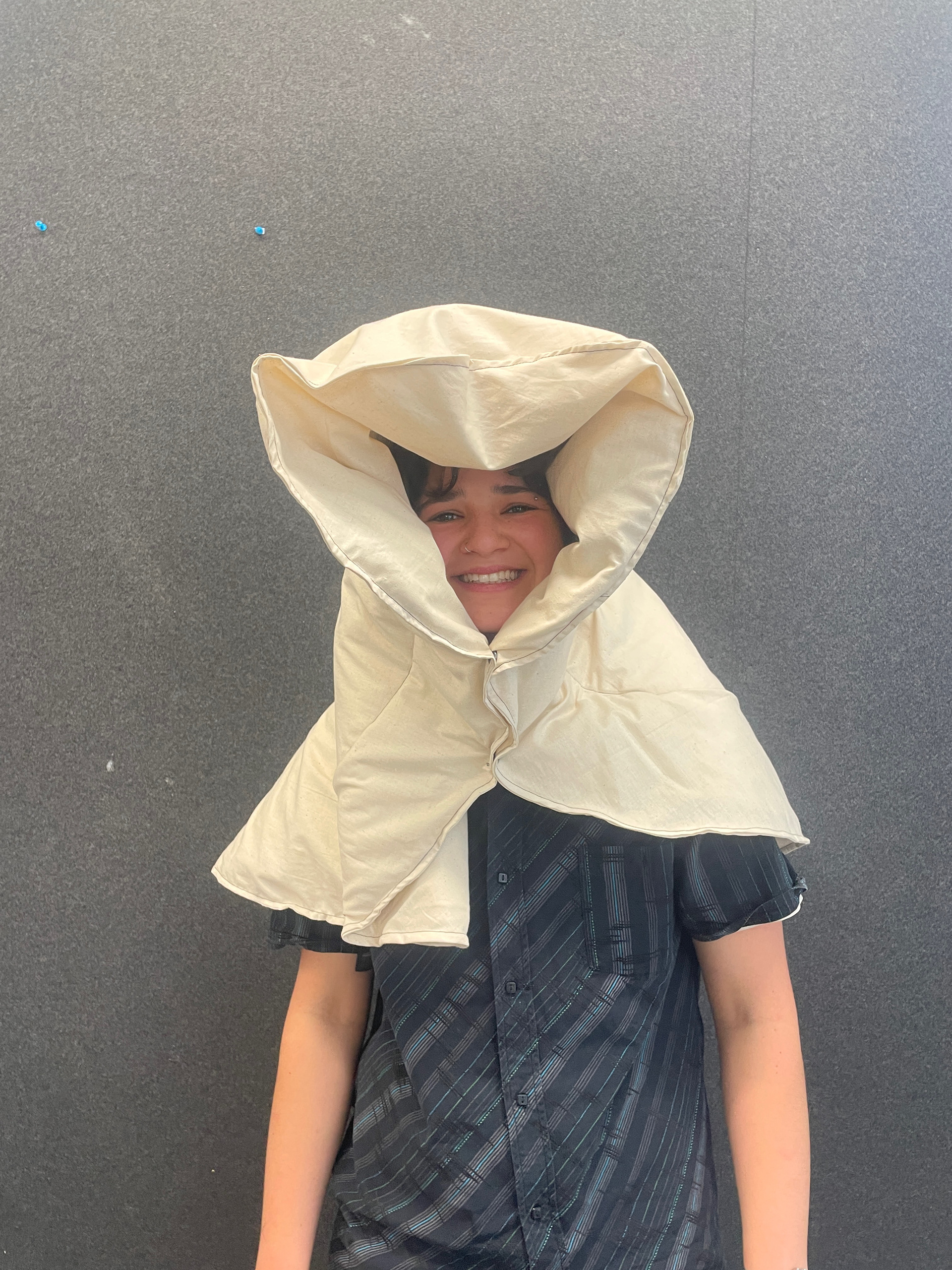
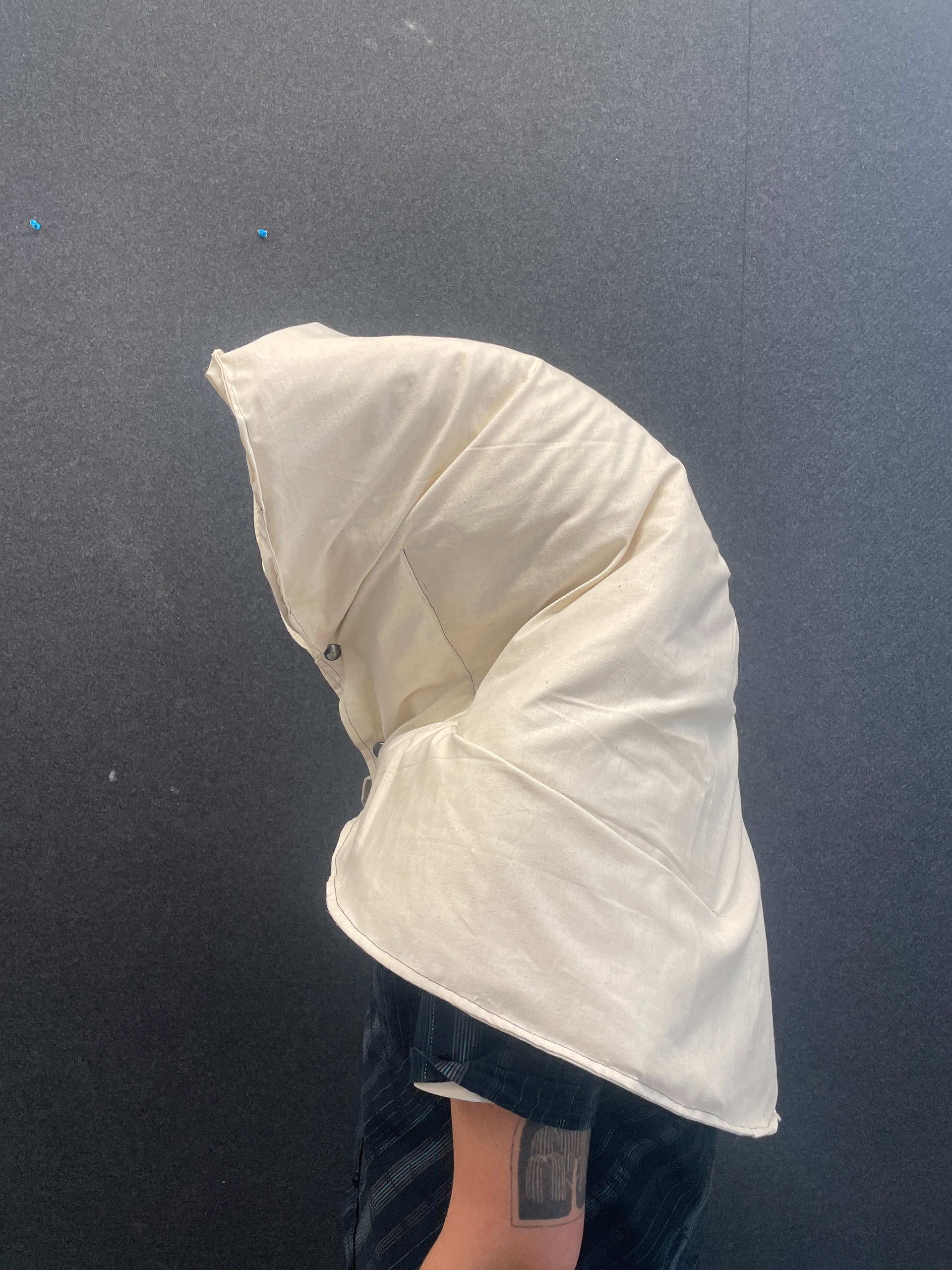
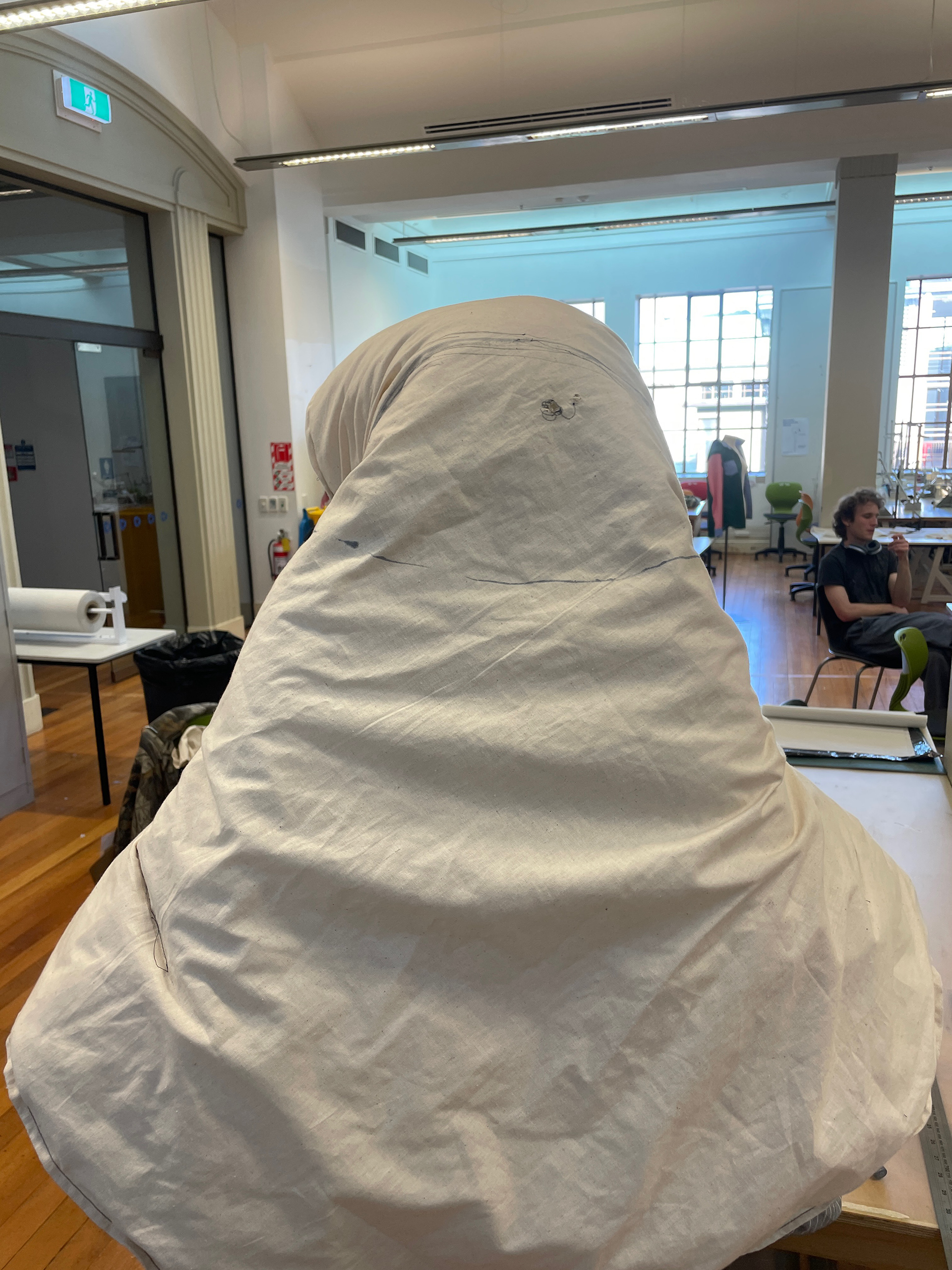
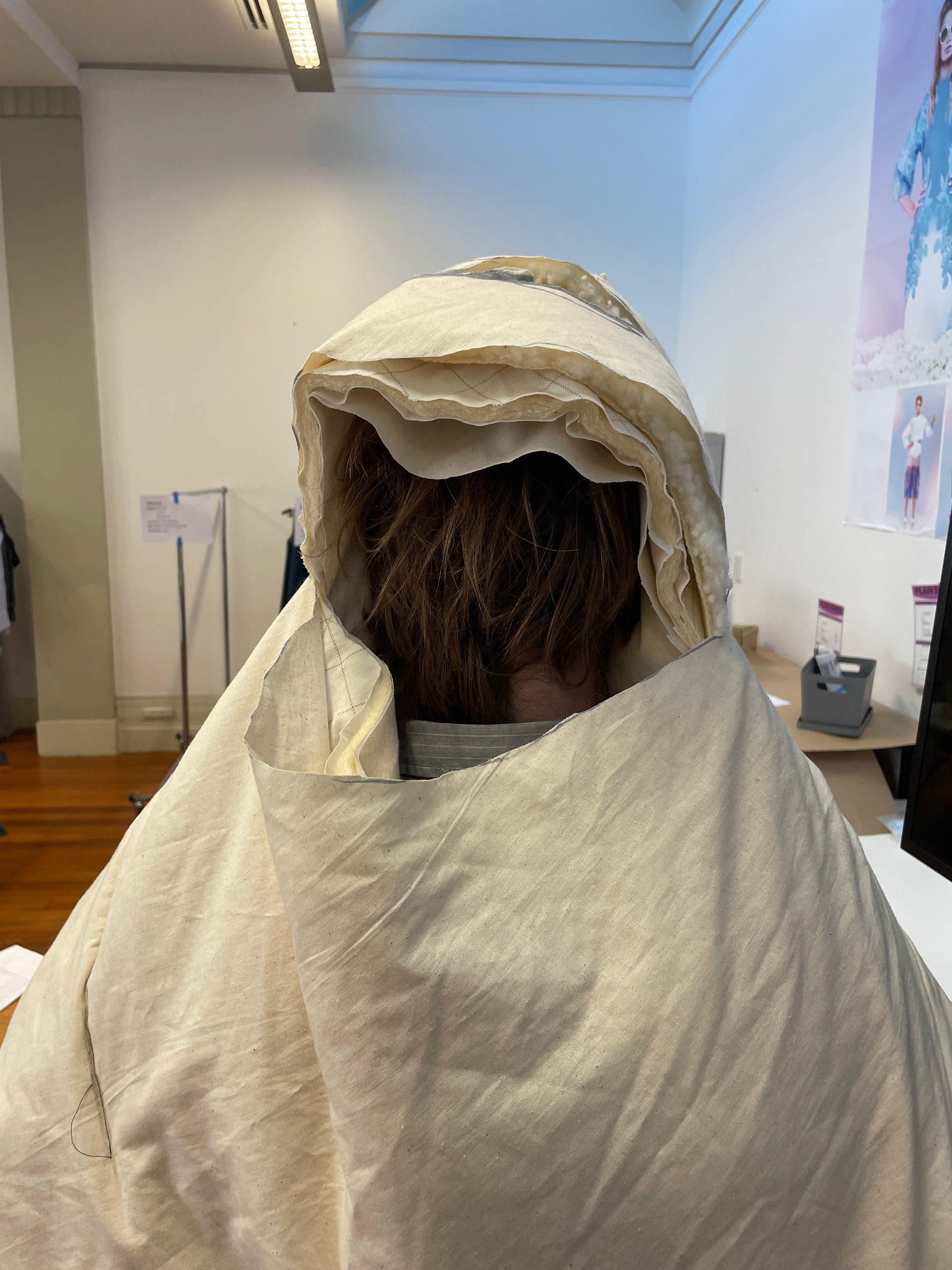
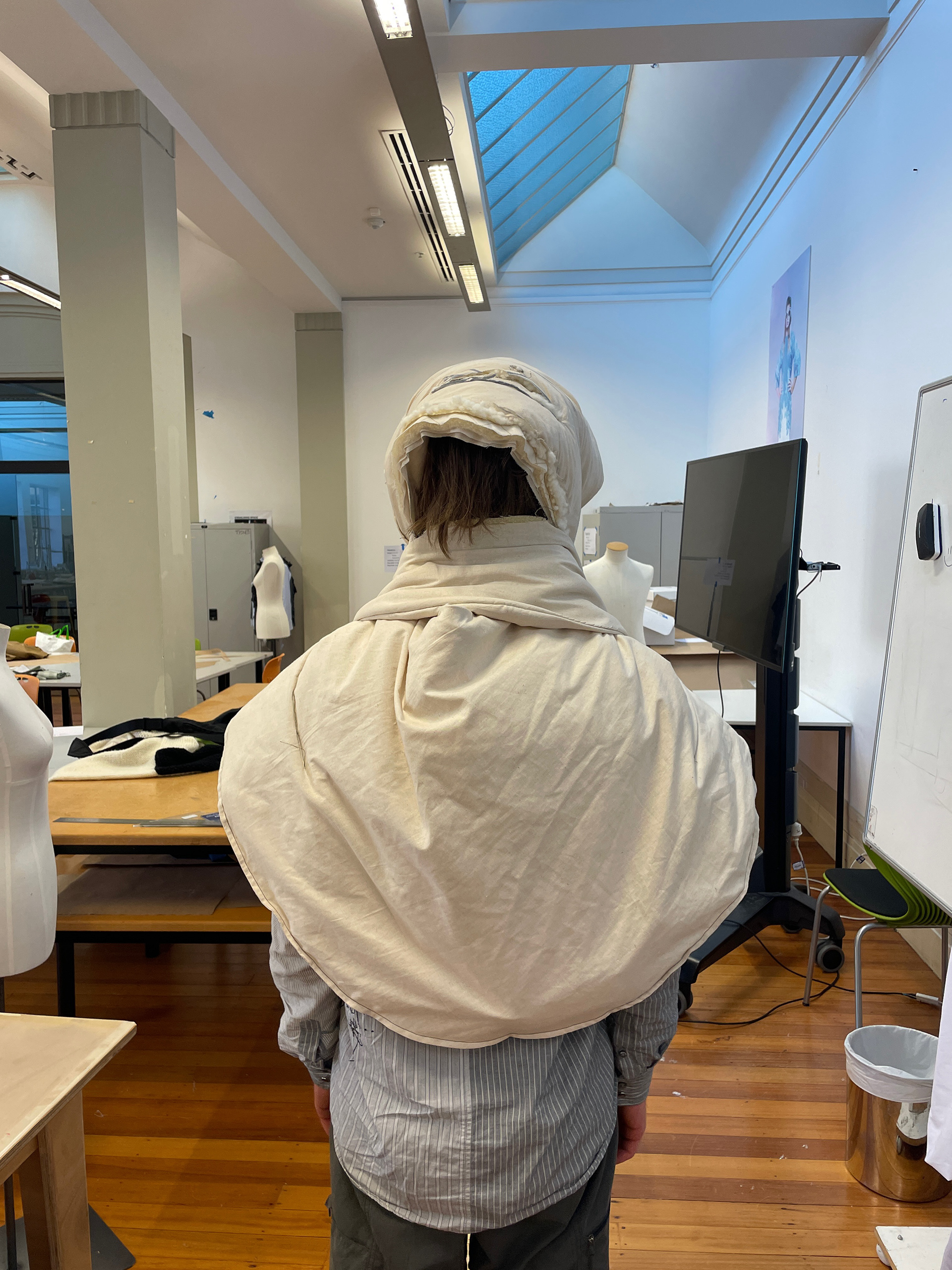
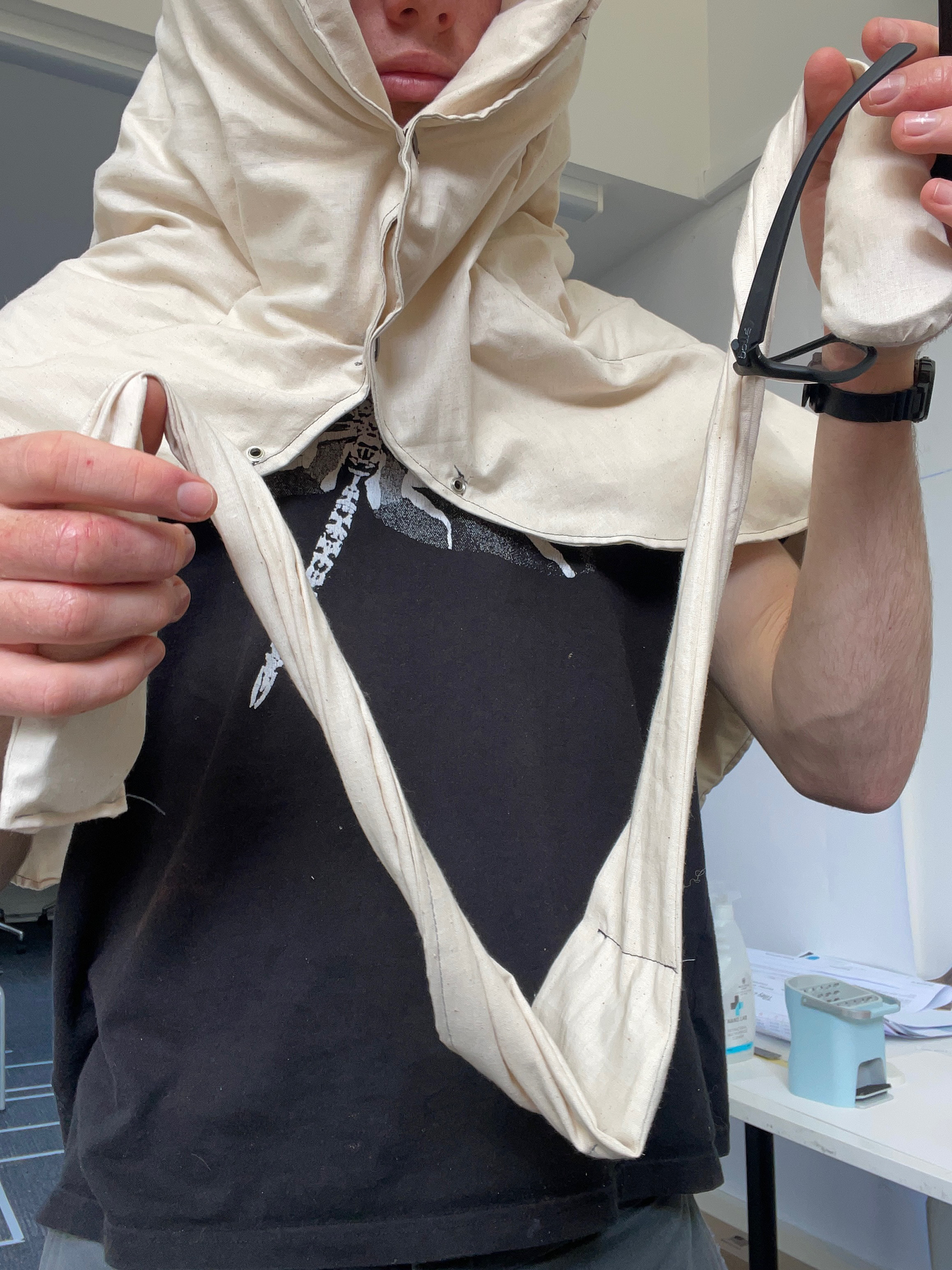
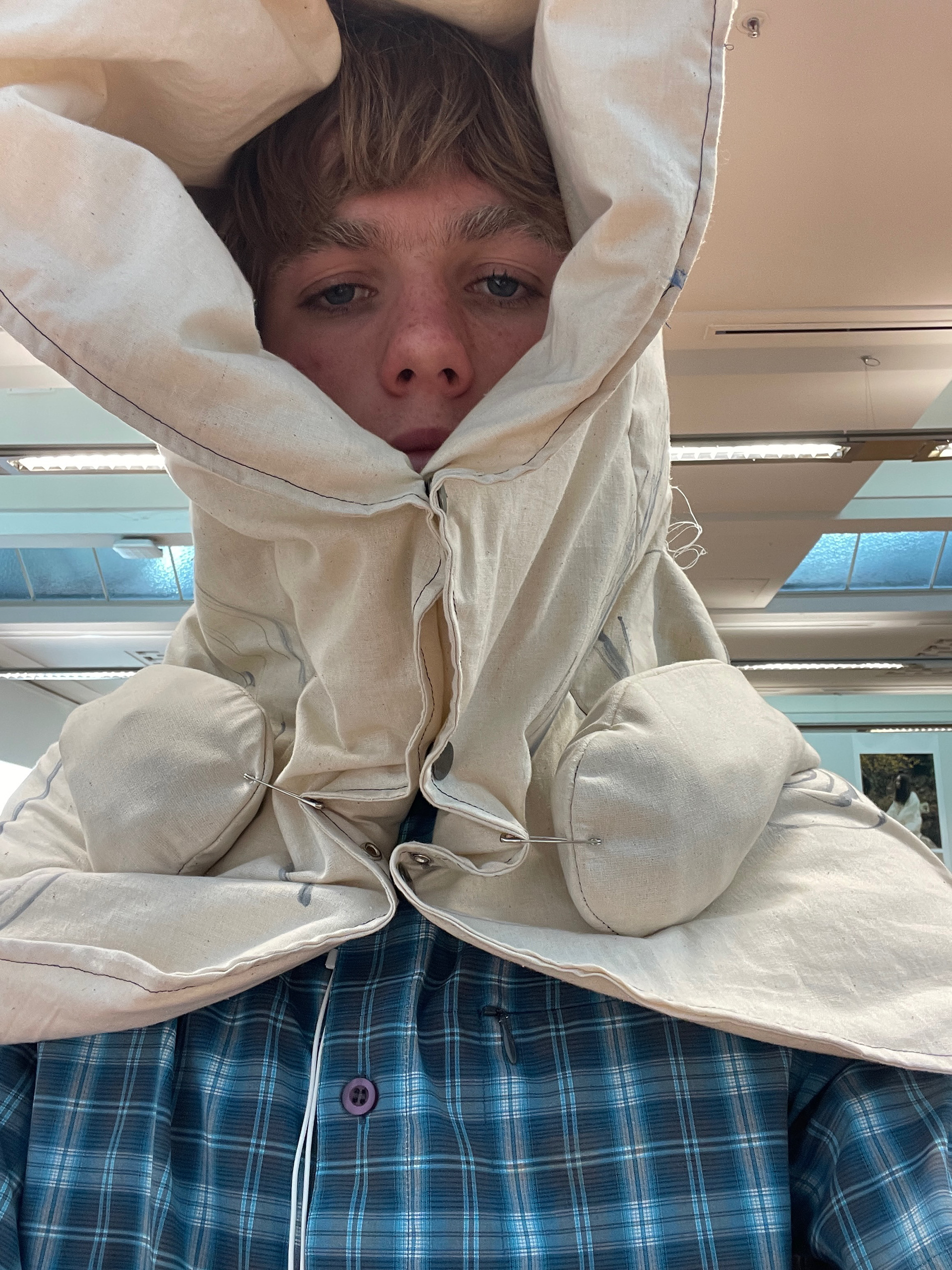
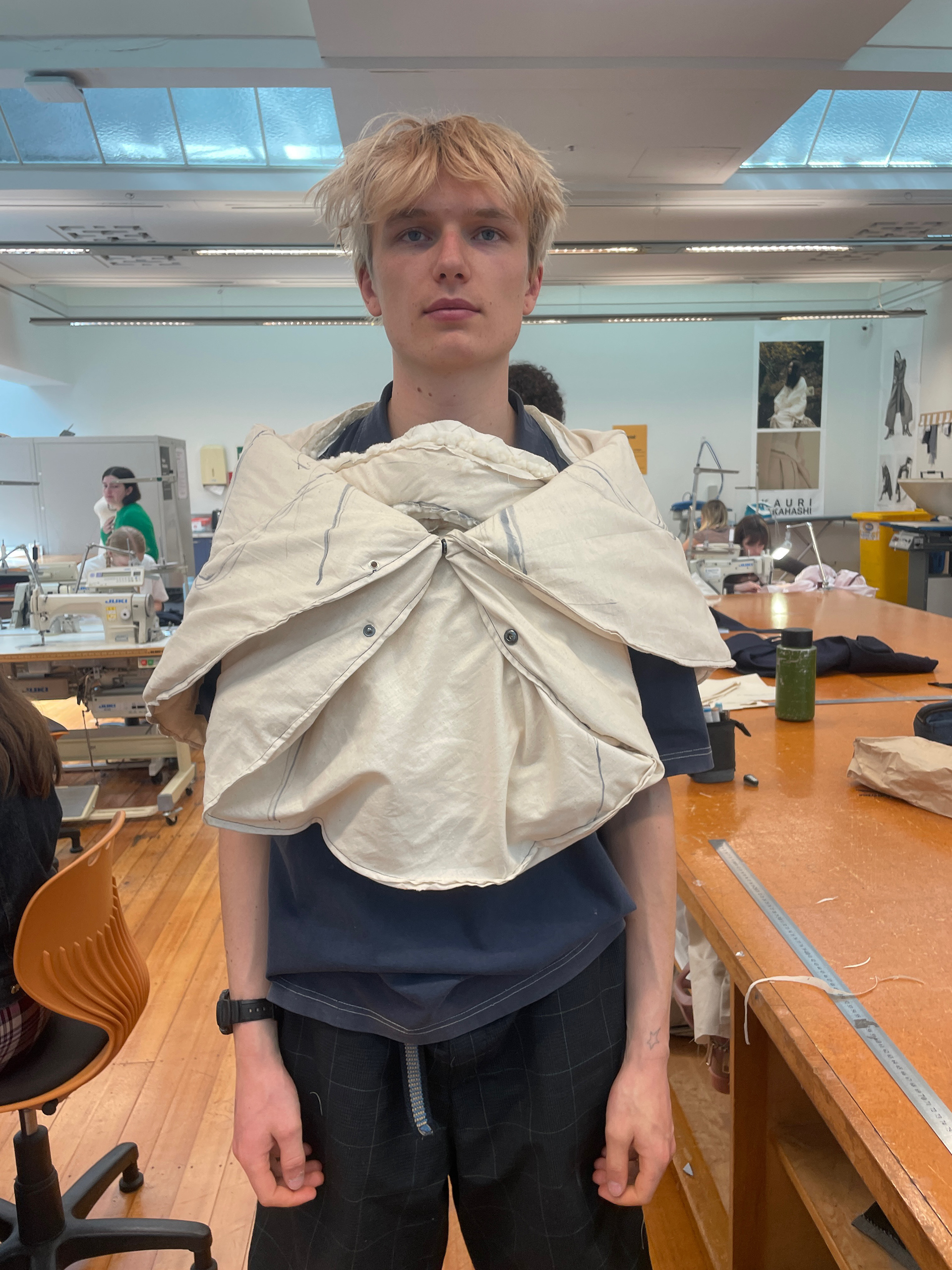
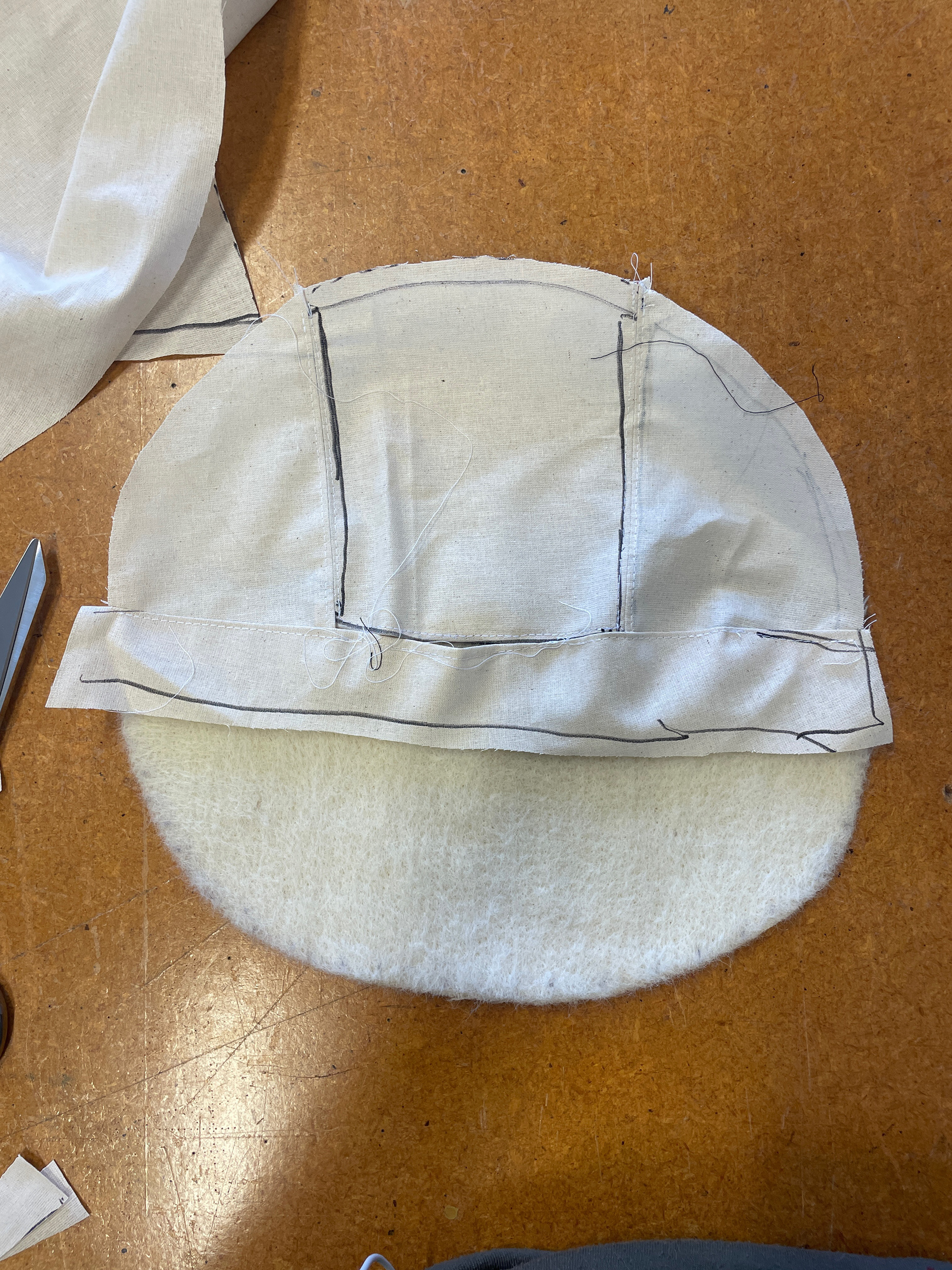
From there, several developments on form structure and weight were made. I edited prototype 2 to make it sit on top of the head easier - that particular solution was unsuccessful. The cloud material was incorporated in the next prototype to provide structure, and also sound dampening around the ears.
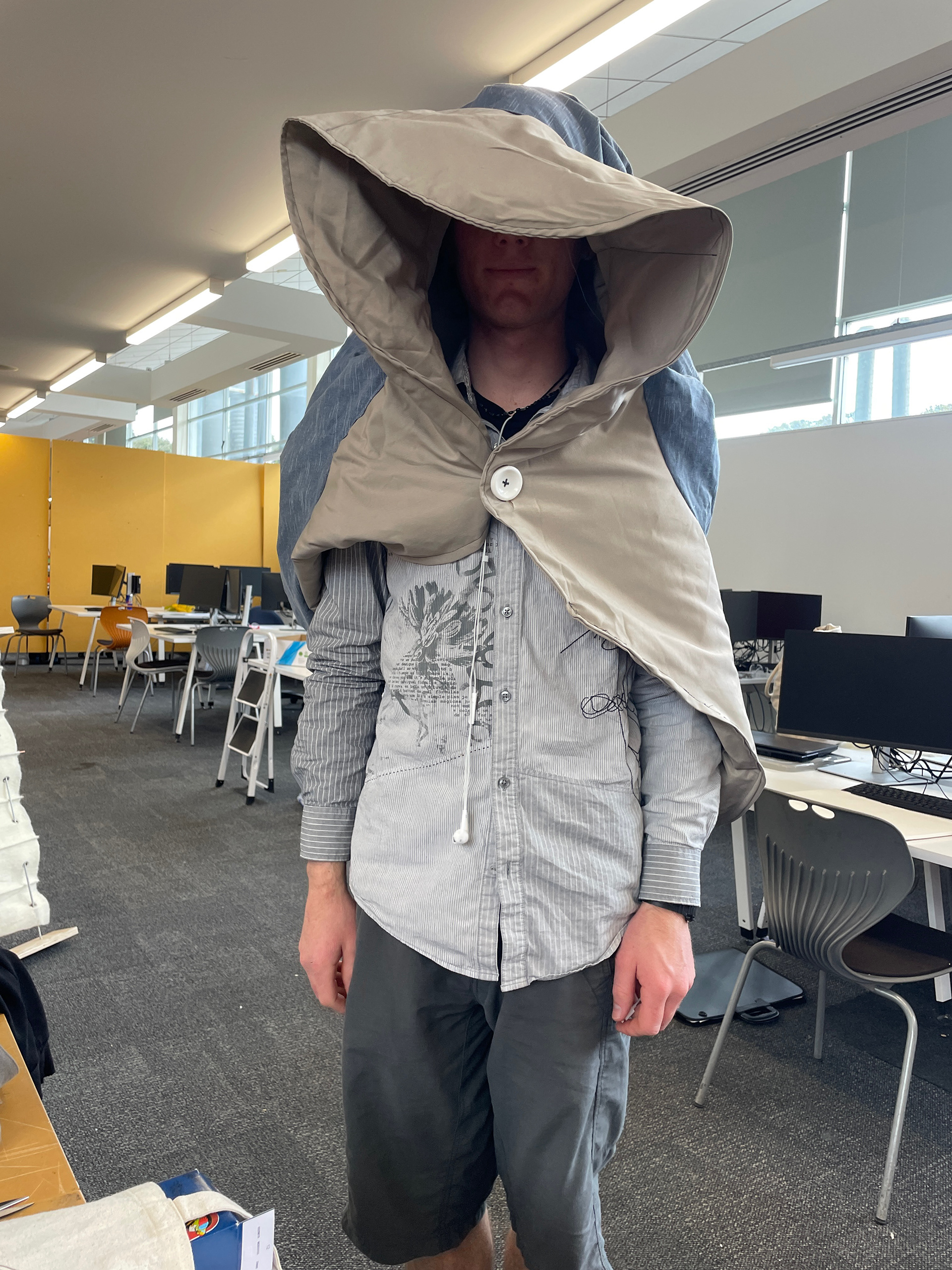
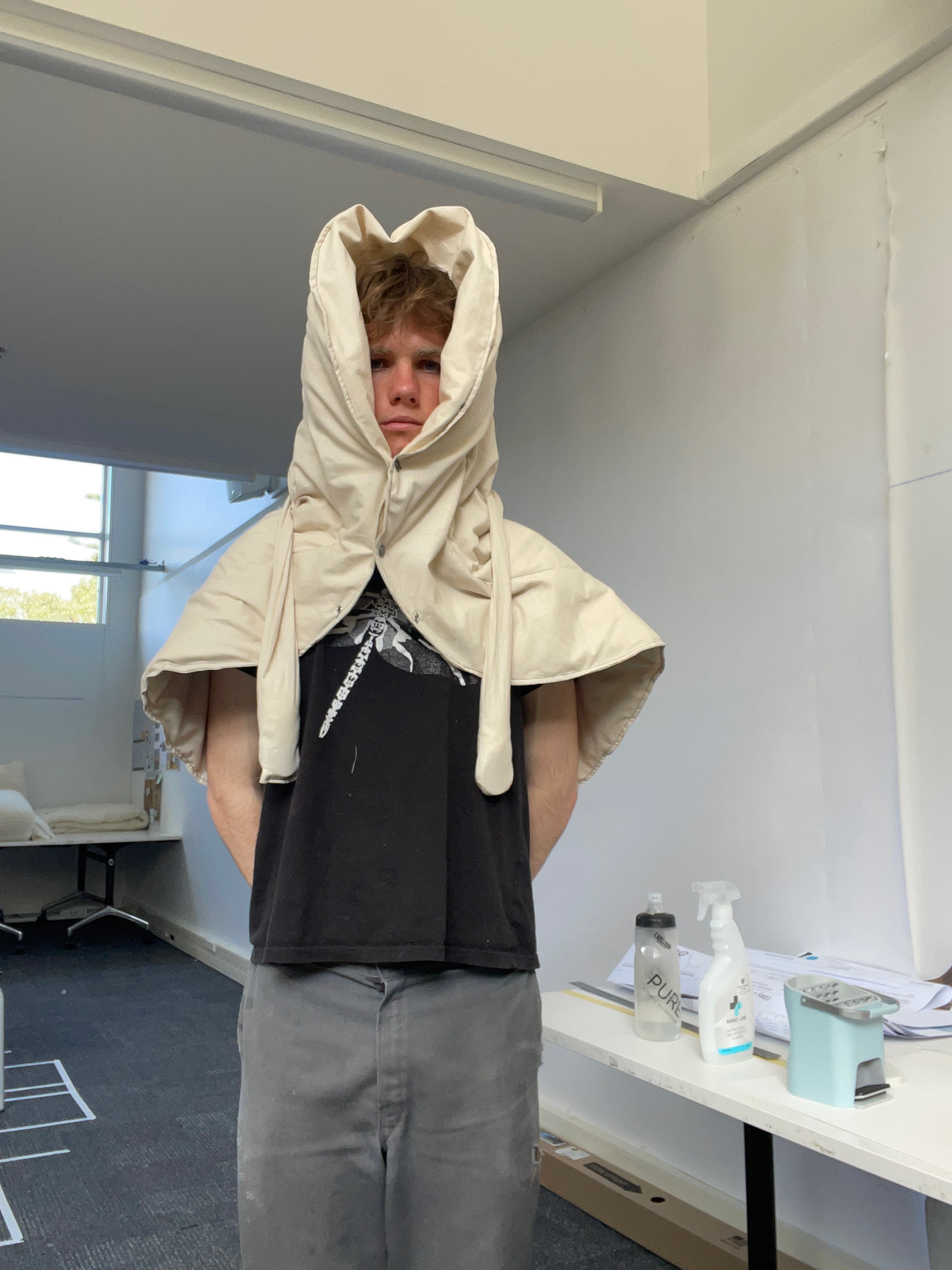
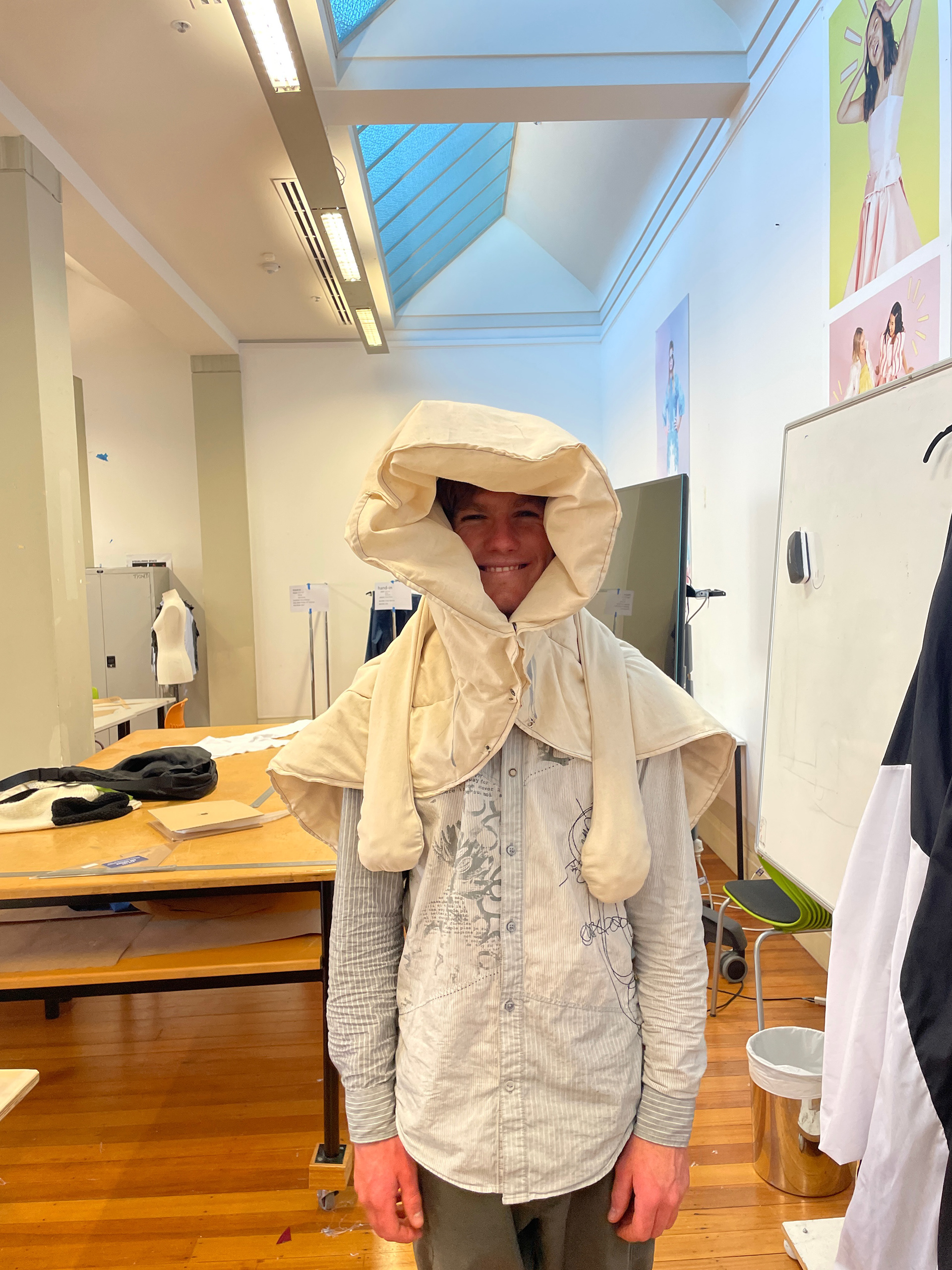
After some trial and error, a slit in the centre of the blanket was added. It sits just behind the crown of the head when worn as a hood, relieving the tension behind the head and distributing more weight to the shoulders. A massive benefit of this slit, is that it allows the user to wear the hood as poncho by slipping their head through the slit.
Another addition is the weighted necklace, which allows the user to chose whether or not they want to use it, and if so, where to put it.
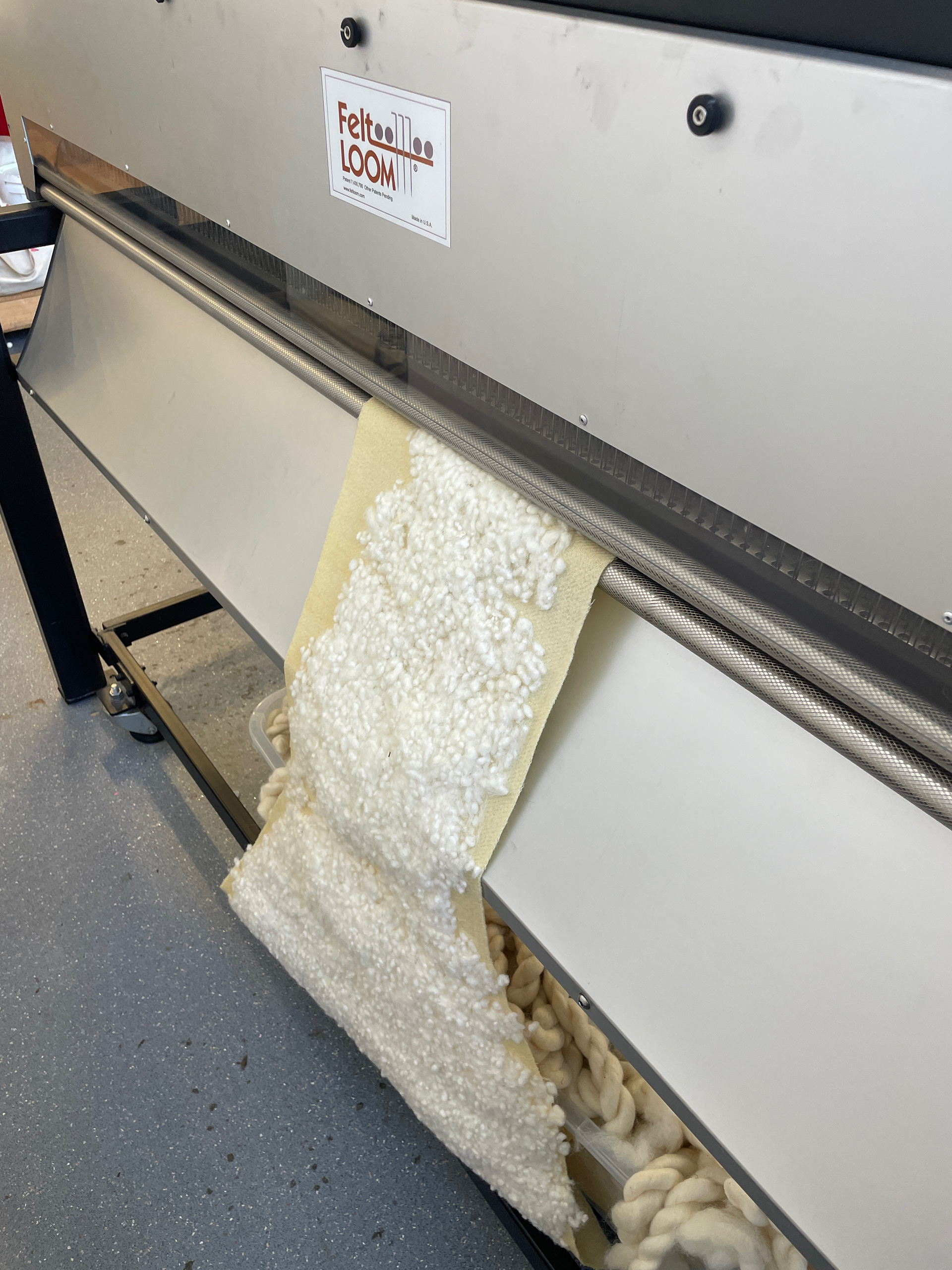
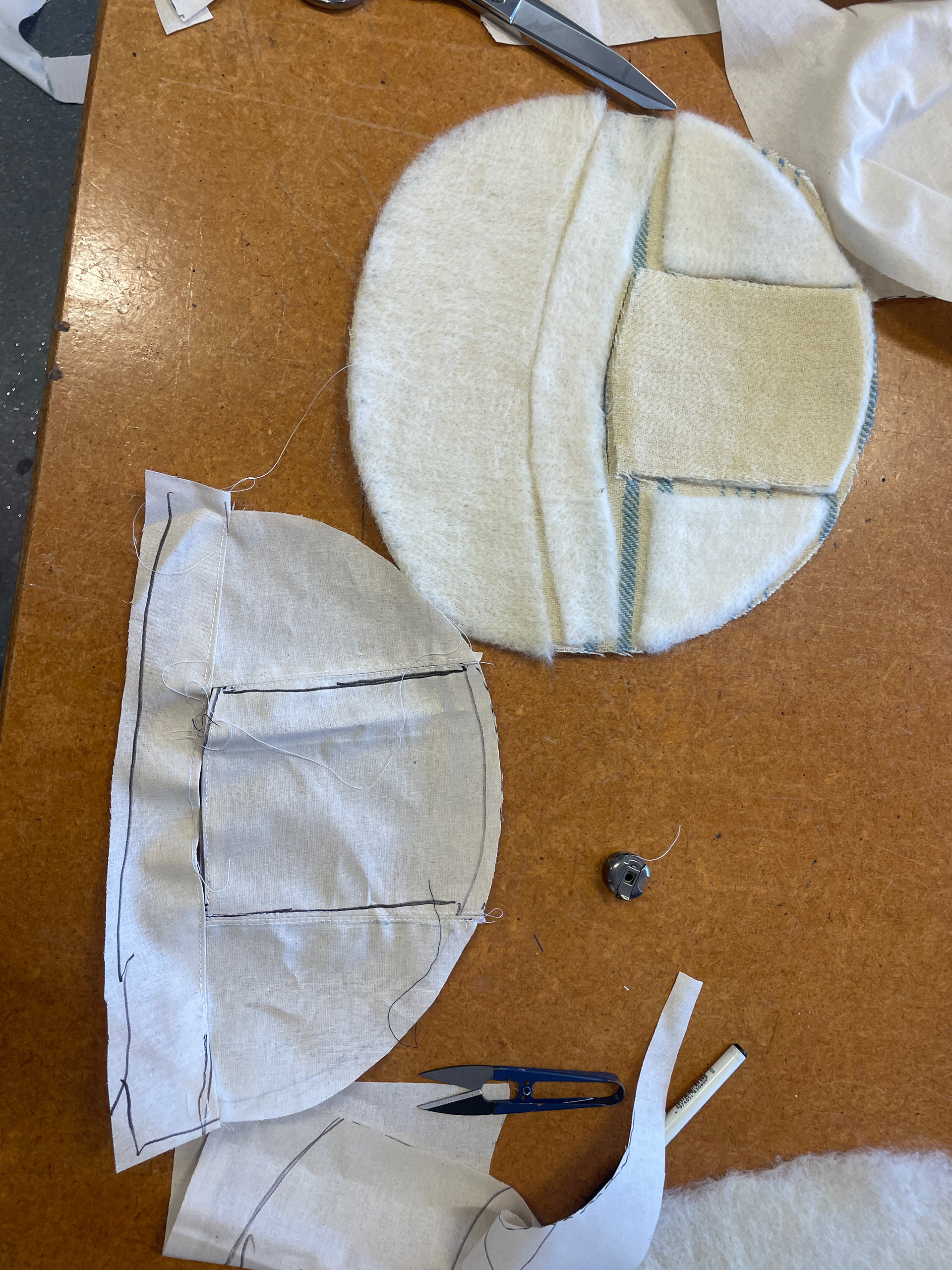
The final photos show the beginning of the next prototype, exploring where different thicknesses and types of wool could be used in order to use their inherent properties and varying amounts of structure.
Colour Research
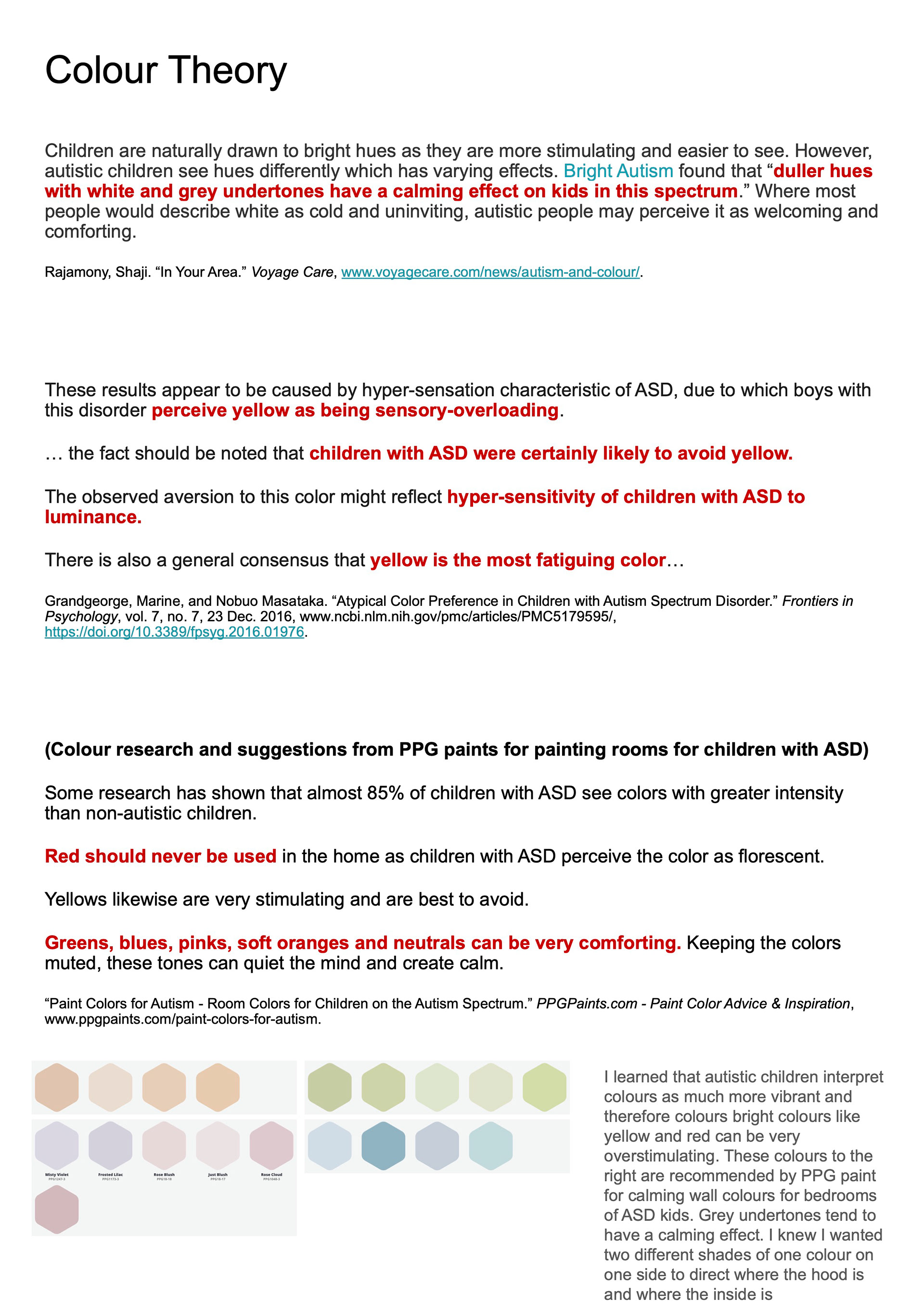
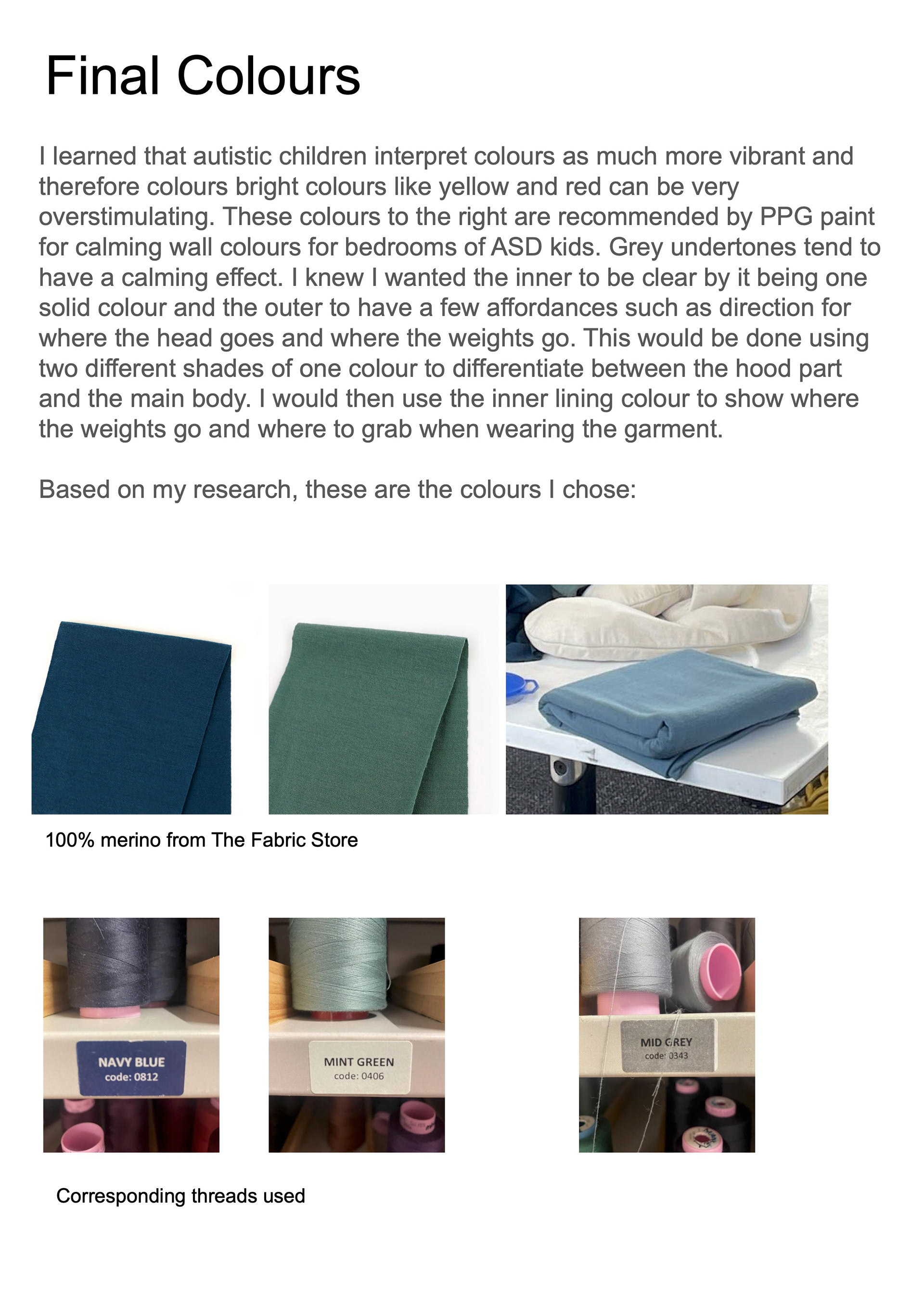
This is the point where I began to research appropriate colours for the final garment.
Prototypes 6
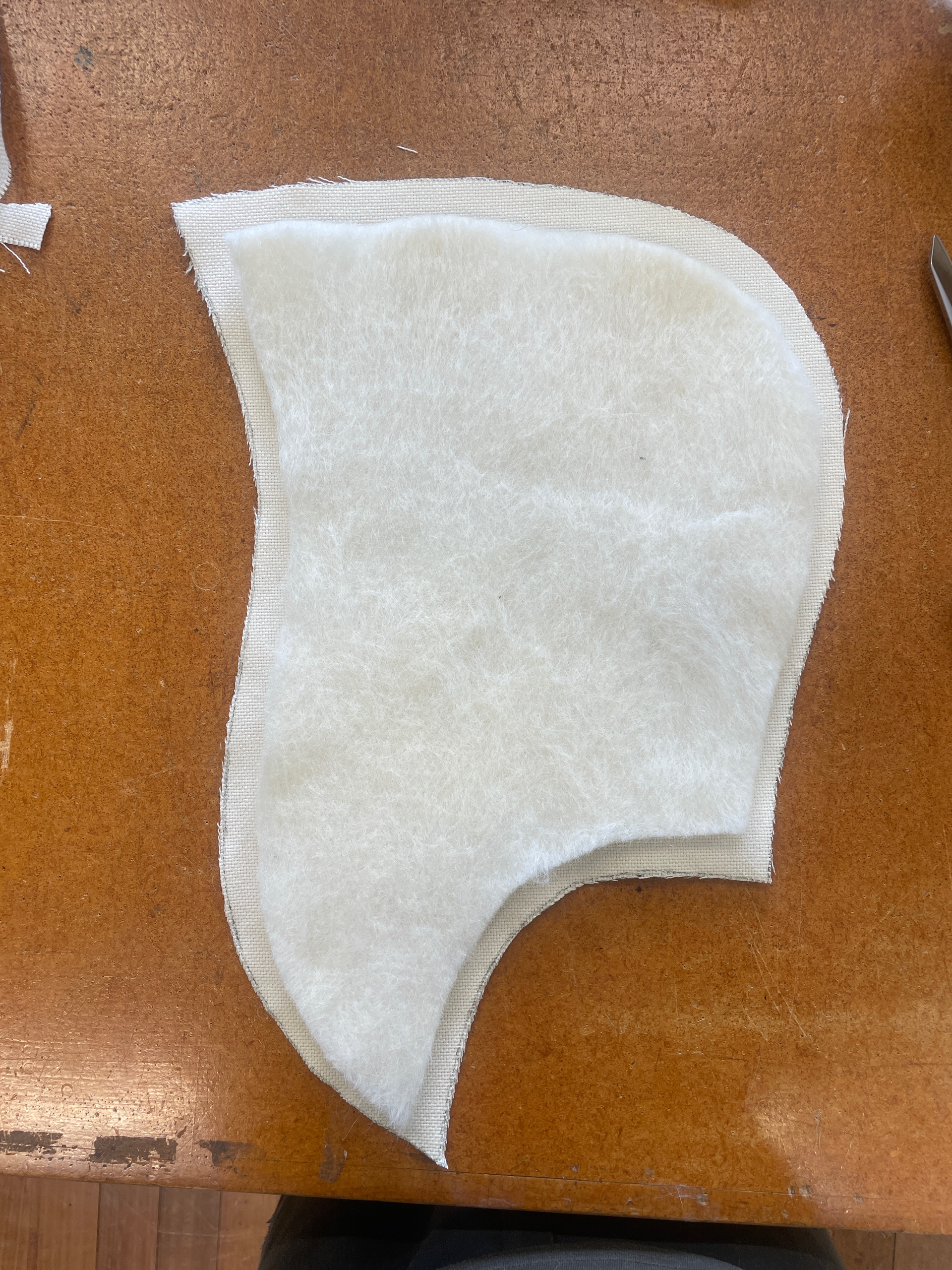
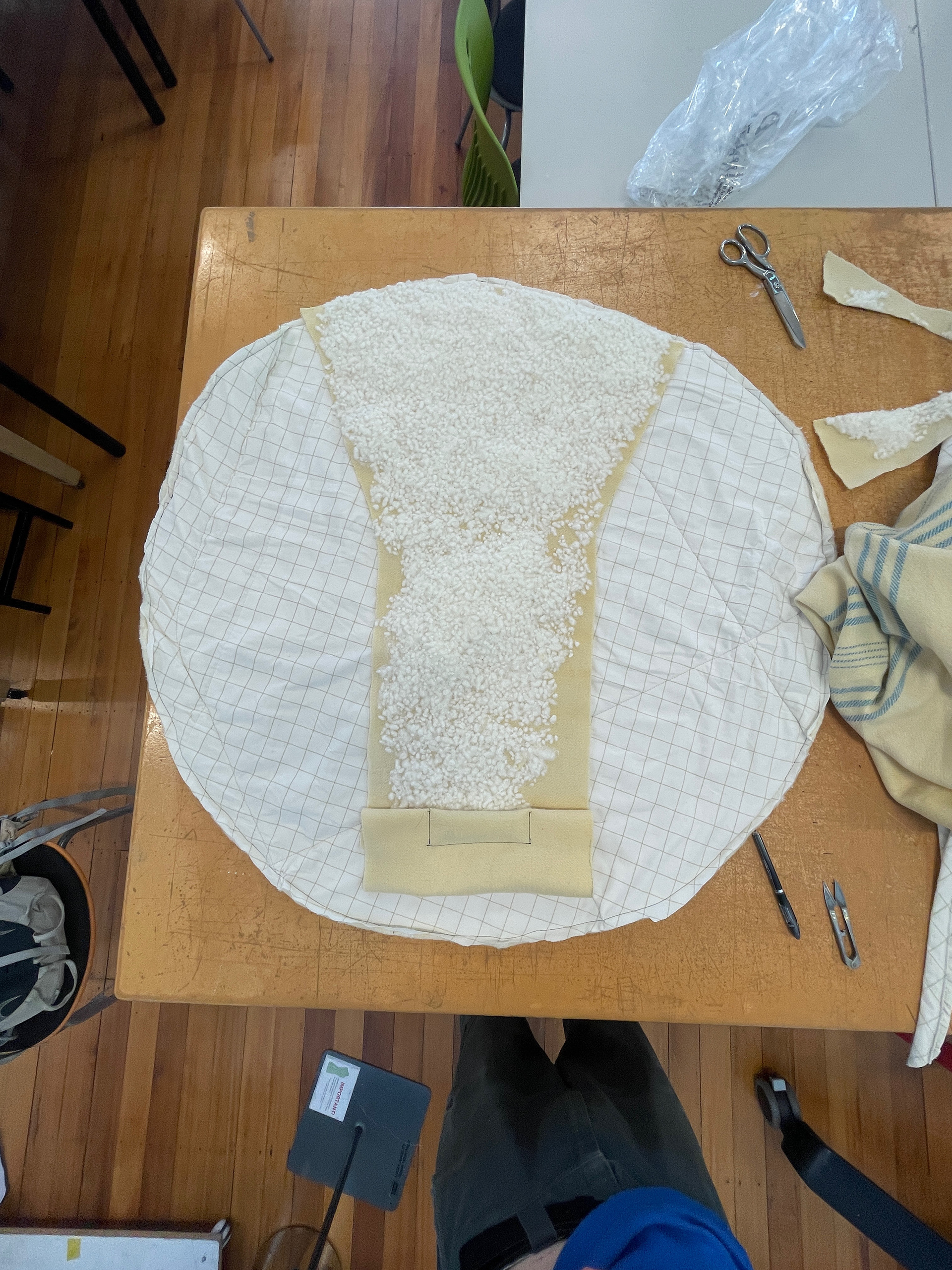
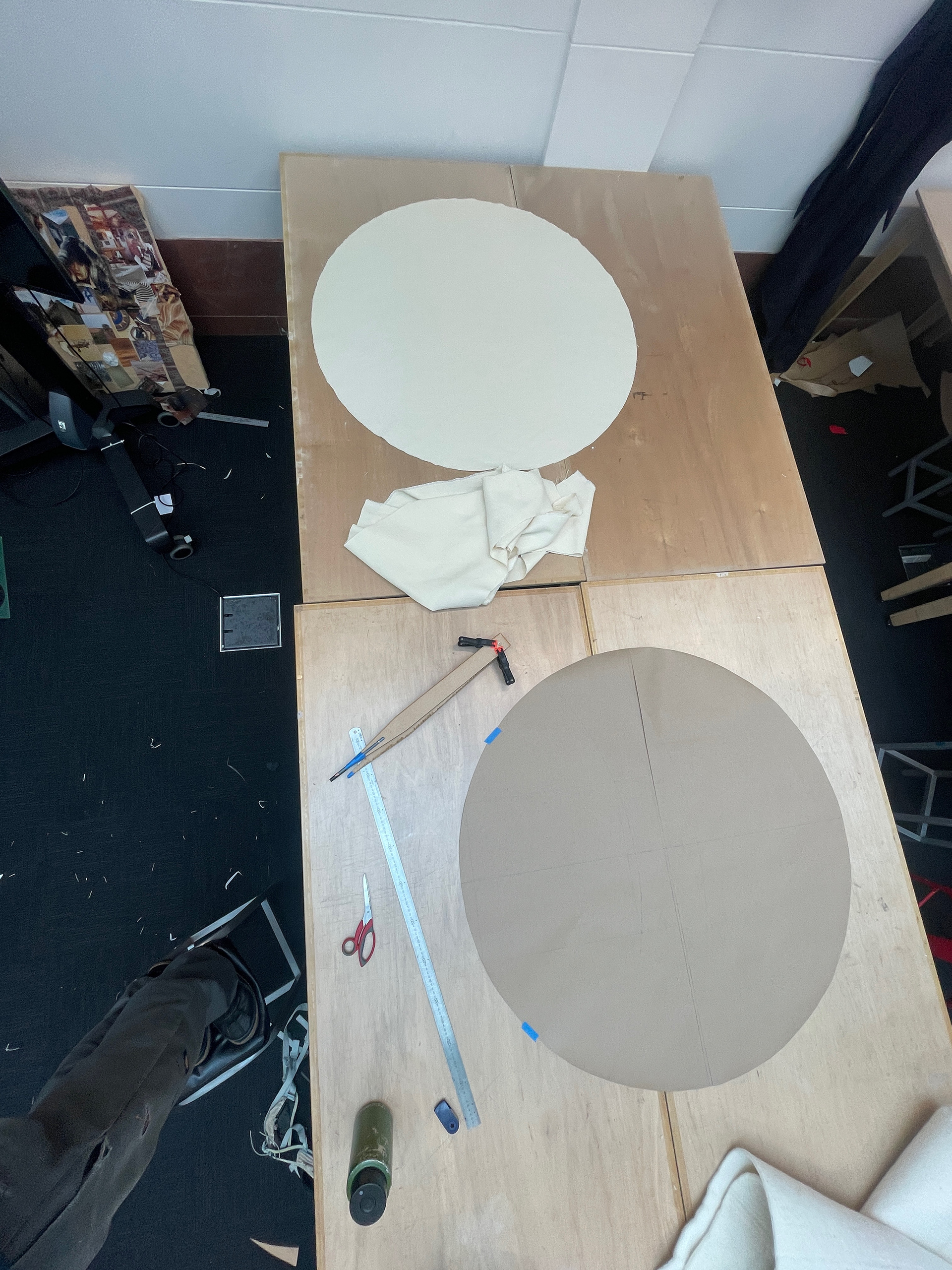
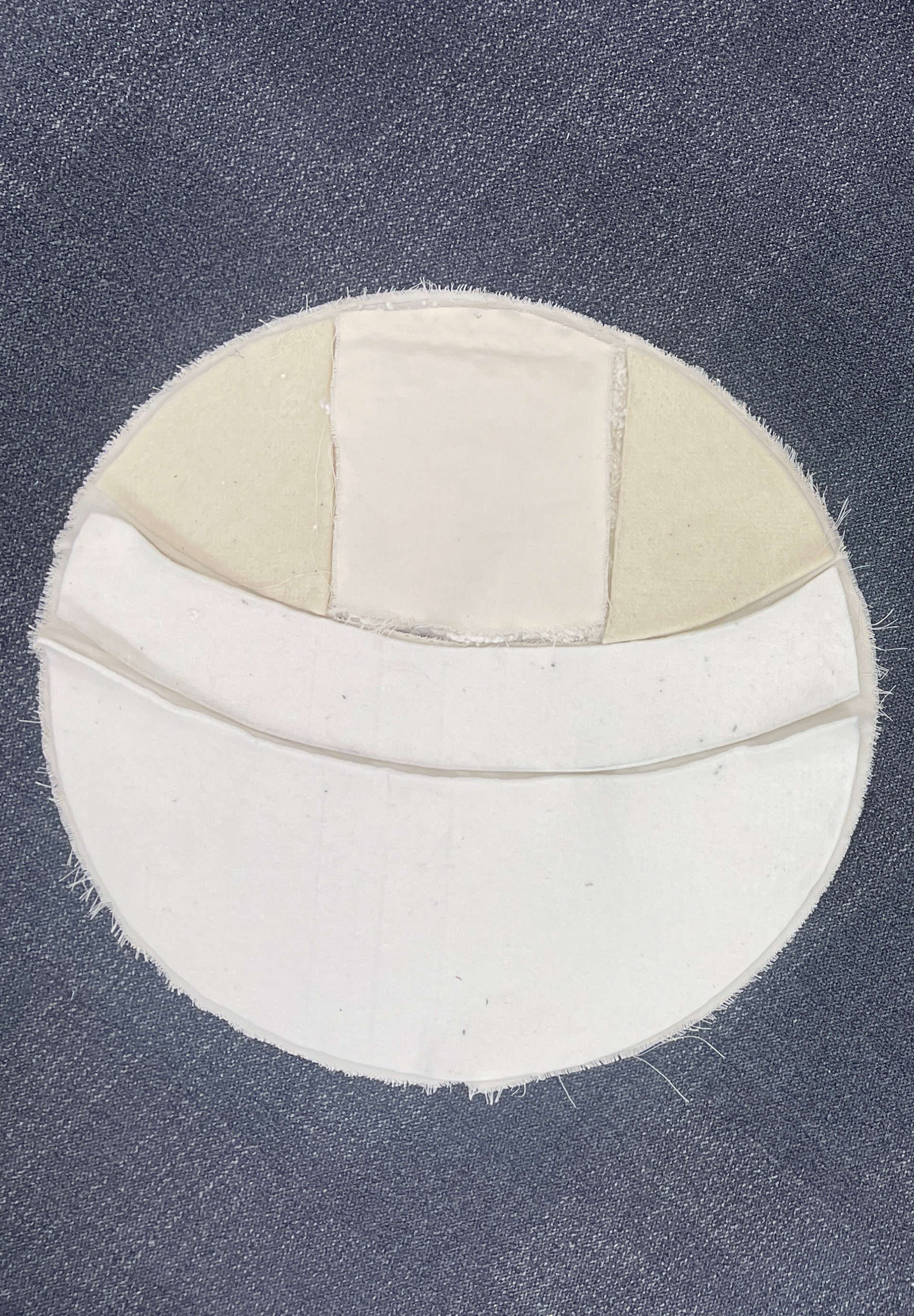
Intended to be the final prototype, this one was using the bulk of my ordered material from Wise Wool; costly stuff! I felted different densities of of wool to a blanket substrate, to achieve a range of structure, warmth, thickness and sound dampening in the relevant places. The felt was too thick and the whole concept behaved differently at scale. It was far too rigid and not at all comforting. The blanket sat off of the body, and folded at the gaps in the materials. In an attempt to mitigate this, I cut out a circle of memory wool (high loft felt, meant to replicate memory foam) the size of the whole blanket.
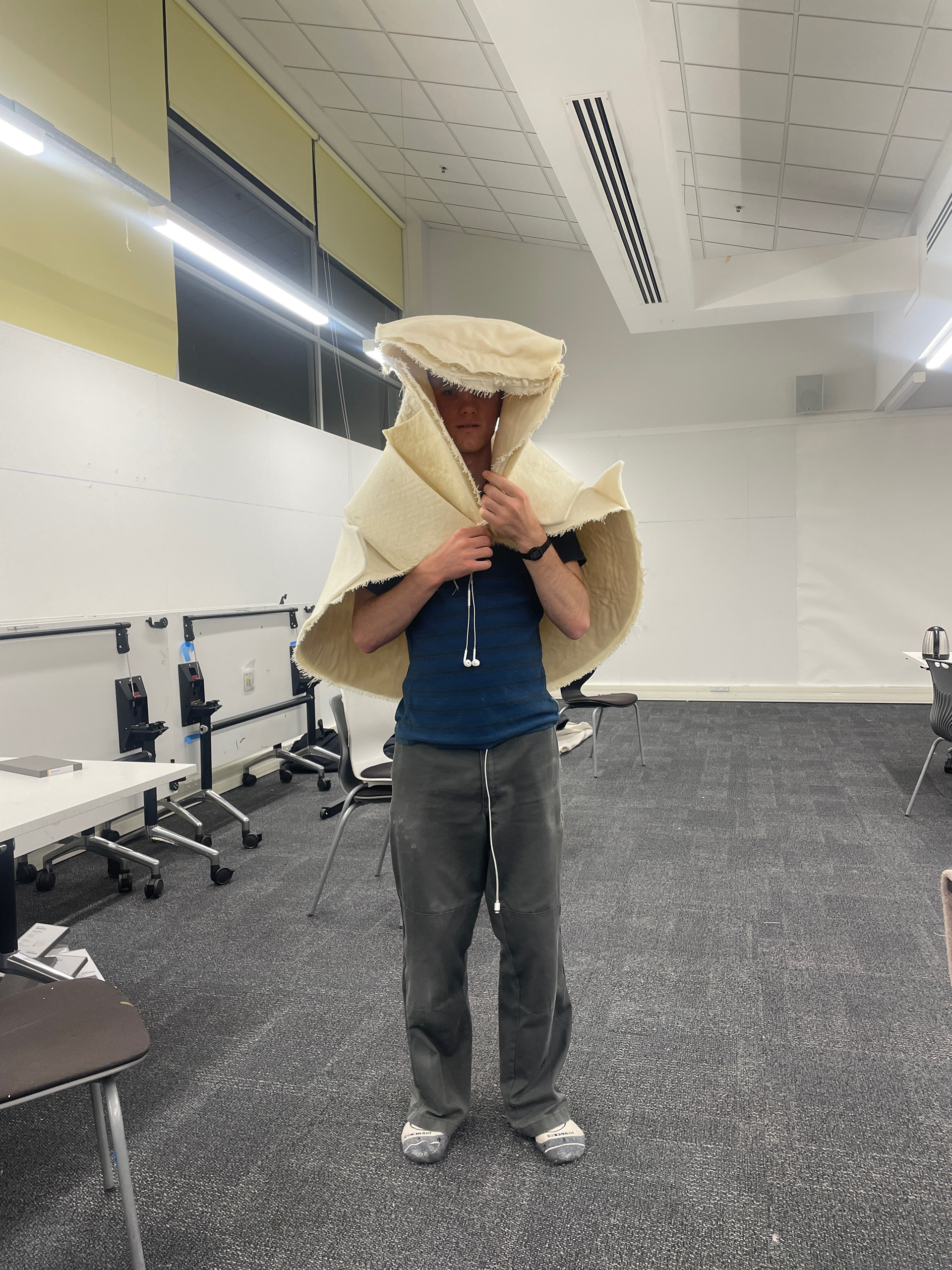
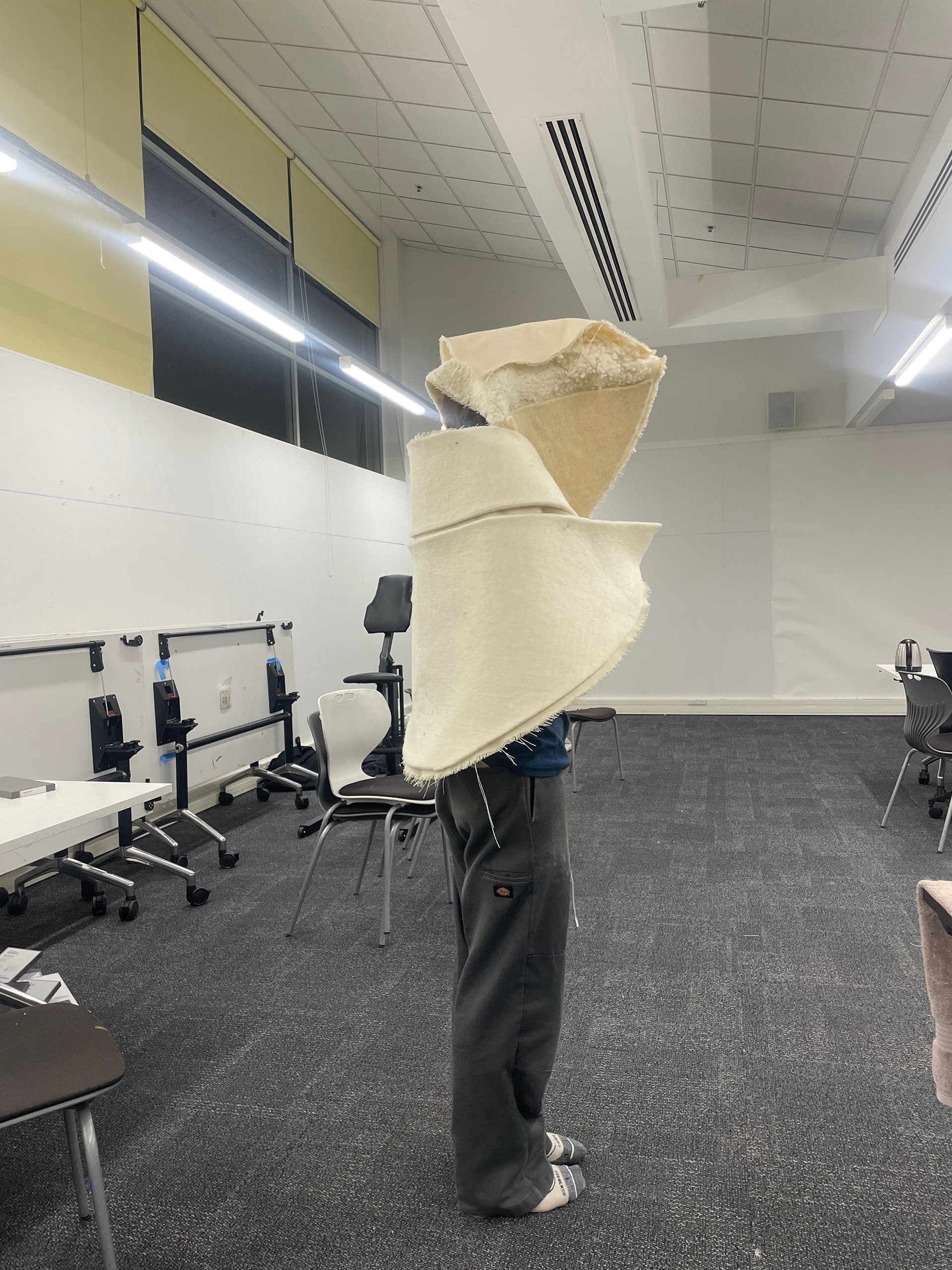
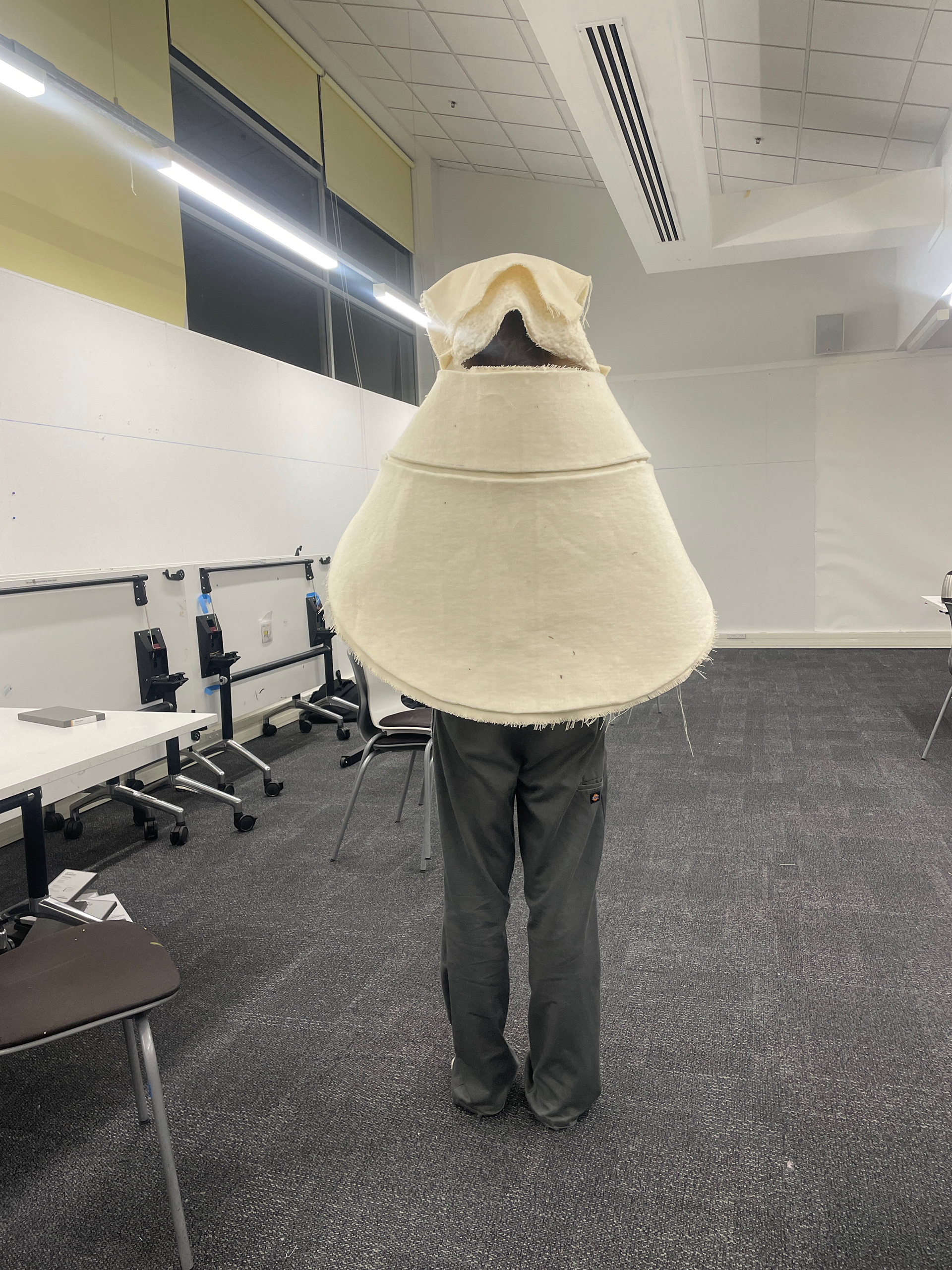
The intention was to felt if over the top of this prototype... but when I put it one my itself, it was immediately clear that this much simpler inner was far superior. It sat better over the head and shoulders, was softer, more comforting and appropriately sound dampening .